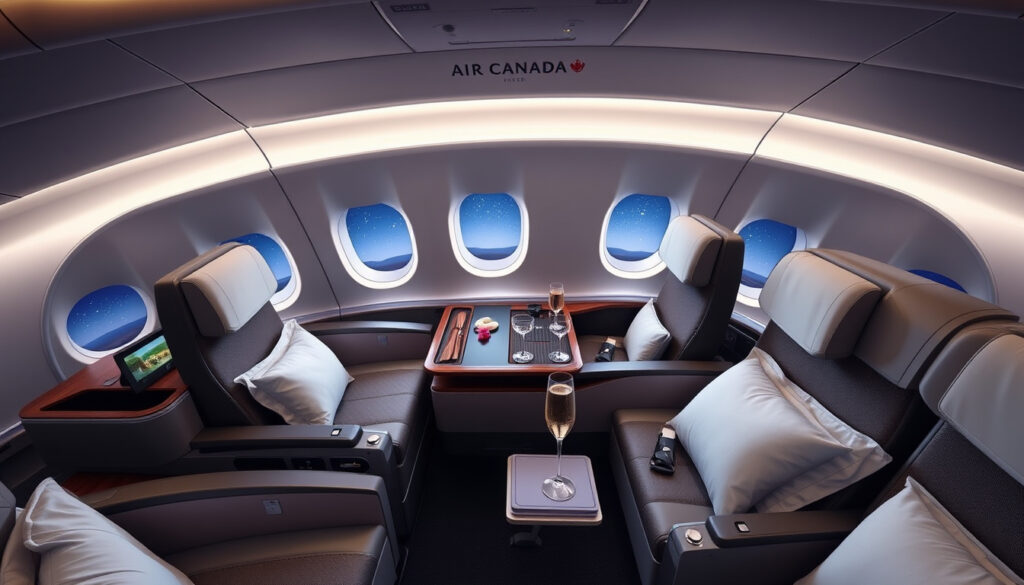
Business Class Air Canada – 2025 Signature Class Guide
Air Canada Signature Class represents the airline’s premium long-haul business class offering, designed for passengers traveling between Canada and destinations across Africa, Asia, Australia, Europe, and South America. The product features lie-flat seating, dedicated lounge access, and priority services across Boeing 787, 777, and Airbus A330 aircraft. Understanding what this premium cabin delivers can help travelers decide whether upgrading is worth the investment for their next journey.
The Signature Class experience extends beyond the aircraft itself, beginning at the airport with dedicated check-in counters, expedited security processing, and priority boarding. For frequent flyers and those seeking comfort on extended routes, the cabin has earned recognition as the flagship business class product within the Star Alliance network.
This guide examines the seat configuration, amenities, dining options, and overall value proposition that define Air Canada’s premium offering in 2025, drawing from passenger reviews, expert assessments, and official airline information to provide a comprehensive overview.
What Is Air Canada Business Class Like?
Air Canada Business Class, officially branded as Signature Class, serves as the airline’s premium long-haul product across its international routes. The cabin replaced the former International Business Class designation, with the rebranding coinciding with the introduction of Boeing 787 Dreamliner aircraft in 2018. Passengers flying on routes to Europe, Asia, Australia, South America, and Africa experience this elevated service level, which includes fully flat lie-flat seats, gourmet dining, and access to Air Canada’s Signature Suite Lounges in Toronto and Vancouver.
Direct aisle access, 1-2-1 layout
Africa, Asia, Australia, Europe, South America
Boeing 787, 777, Airbus A330
Signature Suite and Maple Leaf Lounges
According to Air Canada’s official information, the Signature Class product emphasizes what the airline describes as “an elevated experience” designed for passengers who prioritize comfort on lengthy journeys. The service integrates onboard amenities with ground facilities, creating a seamless premium experience from check-in to arrival.
- Signature Class performs best on Boeing 787-9 and 777-200LR aircraft for transpacific routes
- Menu improvements introduced in 2023 enhanced onboard dining quality
- The product delivers substantial comfort improvements over economy, particularly for flights exceeding 8 hours
- Padding and privacy exceed some competitors like Qatar’s reverse herringbone seats
- Crew quality varies between flights, though outstanding service has been reported on numerous routes
- The cabin lacks mood lighting found in newer competitor products, giving it a “sterile” appearance
- Air Canada has indicated the product requires a refresh to remain competitive with evolving premium offerings
| Aspect | Details |
|---|---|
| Aircraft Types | Boeing 787-9, 777-200LR, 777-300ER, Airbus A330 |
| Seat Configuration | 1-2-1 reverse herringbone layout |
| Bed Length | 6’7″ (203 cm) fully flat lie-flat |
| Entertainment Screen | 12-16 inch touchscreen systems |
| Checked Baggage | Two pieces up to 32 kg each |
| Pre-Departure | Sparkling wine, still water, and welcome drinks |
| Lounge Network | Signature Suite (Toronto/Vancouver), Maple Leaf Lounges |
| Aisle Access | Direct for all passengers (no climb-over required) |
| Storage | Compartments for phones, wallets, laptops; flat surfaces |
| Seat Features | Massage functions, adjustable air inflation, touchscreen controls |
What Are Air Canada Business Class Seats Like?
The Signature Class seat represents one of the most critical components of the product, particularly for passengers undertaking long-haul journeys where comfort directly impacts arrival readiness. Air Canada equips its widebody fleet with reverse herringbone seats arranged in a 1-2-1 configuration, meaning every passenger can access the aisle without crossing over neighboring travelers. This design contrasts sharply with older angled business class layouts where middle-row passengers needed to climb over window-seat neighbors to reach the aisle.
Seat Design and Privacy Features
According to detailed passenger reviews, the reverse herringbone configuration positions seats to face outward rather than straight ahead. This orientation naturally provides improved privacy, as passengers are not directly visible to those beside them when seated. The staggered arrangement creates additional separation between travelers in adjacent rows, reducing the sense of proximity that occurs in forward-facing designs.
Reviewers consistently note that the seat padding exceeds what some competitors offer, including Qatar Airways’ reverse herringbone product. The Air Canada seats incorporate adjustable air inflation systems that allow passengers to customize firmness, a feature particularly appreciated on flights exceeding 12 hours. Combined with the included mattress topper when in bed mode, the sleeping surface receives positive marks for extended rest.
SeatGuru provides detailed seat maps for Air Canada Signature Class aircraft, allowing passengers to identify preferred positions before booking. Window seats offer maximum privacy for solo travelers, while center seats in pairs provide intimacy for couples traveling together.
Lie-Flat Functionality and Bed Experience
Signature Class seats convert to fully flat beds measuring 6’7″ (203 cm) in length, accommodating the majority of passengers comfortably. The transformation process involves touchscreen controls that adjust recline angle, lumbar support, and leg rest position. When fully extended into bed mode, the seat becomes a horizontal sleeping surface with bedding provided by cabin crew.
On routes such as Vancouver to Sydney, which spans approximately 14 hours and 45 minutes, the lie-flat capability proves particularly valuable. Passengers can achieve genuine rest rather than the compromised sleep available in inclined seats. Reviewers who flew the Vancouver-Sydney route on 787-9 aircraft reported successfully sleeping for extended periods, contributing to reduced jet lag upon arrival.
The massage function integrated into the seat provides additional comfort during cruise, though some reviewers noted the feature’s subtle intensity. Storage compartments positioned throughout the seat area accommodate phones, wallets, laptops, and other personal items, keeping essentials within reach without cluttering the sleeping surface.
Workspace and Counter Space
For passengers combining work with travel, the 777-300ER aircraft configured for Signature Class offers generous counter space suitable for laptop workstations. The Vancouver-Montreal transcontinental route, approximately 5 hours, demonstrates this variant’s suitability for business travelers who need to maintain productivity. Flat surfaces adjacent to the seat provide writing space, while power outlets ensure devices remain charged throughout the journey.
Touchscreen controls manage not only seat position but also lighting, allowing passengers to create personalized ambient conditions. However, reviewers have noted the absence of mood lighting systems found in newer competitor products, contributing to what some describe as a “sterile” cabin atmosphere. Air Canada has acknowledged internally that the product requires modernization to remain competitive with evolving premium offerings from airlines including Qatar Airways and ANA.
What Amenities Come with Air Canada Business Class?
The Signature Class experience encompasses amenities both in the air and on the ground, creating an integrated premium journey. Ground amenities begin at dedicated check-in counters in major airports and extend through expedited security lanes and priority boarding. The total experience combines physical comfort with service elements designed to reduce travel stress and enhance overall journey quality.
Lounge Access and Airport Experience
Signature Class passengers gain entry to Air Canada’s Signature Suite Lounges located in Toronto and Vancouver, representing the airline’s premium ground experience. These facilities offer what reviewers describe as “quiet luxury,” featuring à la carte dining options alongside buffets, top-shelf liquors and champagnes, and comfortable seating areas designed for relaxation before boarding. Transportation between gates and aircraft includes premium vehicle transfers via Porsche and BMW vehicles, adding a distinctive touch for passengers departing from lounges.
Comparative reviews rate the Signature Suite Lounges as superior to competitor facilities including United Polaris Lounges and Qatar’s ground offerings. The combination of quality dining, premium beverages, and seamless tarmac transfers creates an experience that begins differentiating Air Canada from the moment passengers arrive at the airport.
Beyond the Signature Suites, passengers receive access to Maple Leaf Lounges throughout Air Canada’s network. Star Alliance Gold members traveling on eligible routes also qualify for lounge entry, extending premium ground experiences to partners and connecting passengers. Priority baggage handling ensures items arrive among the first delivered on arrival, reducing wait times at baggage carousels.
Signature Suite access is limited to Toronto (YYZ) and Vancouver (YVR) for Signature Class passengers. Passengers departing from other cities access Maple Leaf Lounges, which vary in amenities and capacity depending on the specific location.
Inflight Amenities and Entertainment
The inflight experience incorporates lie-flat bedding with mattress toppers, entertainment systems featuring 12-16 inch touchscreen displays, printed menus, and the ability to pre-order meals for specific flights. Touchscreen controls manage seat position, lighting, and entertainment selection, providing passengers direct command over their environment without summoning cabin crew.
Pre-departure service includes sparkling wine and still water, setting a premium tone before takeoff. The storage configuration includes flat surfaces and dedicated compartments for personal electronics, ensuring passengers can organize belongings for both comfort and security during flight.
Food and Dining Service
Air Canada Signature Class dining emphasizes multi-course meals served with champagne and cocktails. Menus underwent refreshment in 2023, improving quality consistency across routes. On longer flights, breakfast service typically occurs approximately two hours after departure, while lunch and dinner services follow standard meal timing appropriate to departure and arrival times.
Passenger reviews describe the food as plentiful and consistent, though some note it lacks the excitement found in competitor offerings from Middle Eastern and Asian airlines. The quality of pre-flight dining in Signature Suite lounges partially compensates for onboard limitations, with reviewers specifically praising the à la carte options available before departure from Toronto and Vancouver.
Naya water is provided pre-departure and throughout flights, ensuring hydration remains manageable despite cabin conditions. Service quality varies between flights, with some reviewers reporting outstanding crew interactions while others experienced merely adequate service. The inconsistency appears tied to specific crew assignments rather than systemic service design, suggesting excellent experiences are achievable on any given flight.
Is Air Canada Business Class Worth It?
Determining value for Signature Class requires weighing the substantial comfort improvements against premium pricing and comparing Air Canada’s product against alternatives in the business class market. Expert reviews and passenger assessments provide guidance for travelers evaluating the upgrade decision.
Comfort and Privacy Advantages
The fundamental advantage of Signature Class over economy class centers on the lie-flat bed capability combined with direct aisle access. On flights exceeding 8 hours, the ability to sleep horizontally significantly impacts arrival condition. Transpacific routes such as Vancouver-Sydney demonstrate this benefit most clearly, where the 14+ hour journey becomes manageable when genuine rest is achievable.
The 1-2-1 reverse herringbone configuration eliminates the climb-over requirement that defines economy class aisle access for window and middle seats. Passengers no longer need to disturb neighbors when accessing lavatories or stretching, and the outward-facing orientation provides privacy that forward-facing seats cannot match.
Value Compared to Competitors
When benchmarked against global premium competitors, Signature Class receives ratings described as solid and acceptable, though not top-tier. Products from Qatar Airways (QSuites) and All Nippon Airways (ANA) consistently rank above Air Canada’s offering in expert assessments, primarily due to more modern cabin design and enhanced mood lighting systems.
The padding and privacy characteristics exceed Qatar’s reverse herringbone implementation, according to some comparative reviews. However, the absence of mood lighting and the aging cabin aesthetic create a product that feels less refined than newer competitor offerings entering service.
Air Canada’s hard product shows its age compared to newer competitors. Travelers expecting the absolute latest premium features may find Signature Class underwhelming, while those prioritizing functional comfort improvements over aesthetic modernization may find the product satisfies their needs adequately.
Best Routes and Use Cases
Signature Class delivers maximum value on transatlantic and transpacific routes where the lie-flat capability enables meaningful rest. The Vancouver-London, Vancouver-Sydney, and London-Montreal corridors represent strong applications where the premium price aligns with genuine comfort benefits. Transcontinental Canada routes, such as Vancouver-Montreal on 777-300ER aircraft, provide comfortable business class experiences suitable for domestic premium travelers.
The lounge access component adds substantial value for passengers with extended airport layovers or those who value pre-flight dining. The Signature Suite experience in Toronto and Vancouver distinguishes Air Canada from competitors lacking comparable ground facilities.
Overall Assessment
Reviews aggregate to a consensus that Signature Class represents a worthwhile upgrade for long-haul travel, particularly where lie-flat sleeping provides genuine utility. The combination of comfortable seating, adequate dining, and premium lounge access creates a complete experience that substantially exceeds economy class. However, travelers seeking the absolute latest premium product may find the aging hard product disappointing compared to newer competitor offerings.
How Much Does Air Canada Business Class Cost and How to Book?
Signature Class pricing varies considerably based on route, season, and booking timing. Understanding the cost structure and available booking methods helps travelers plan and budget for premium cabin travel.
General Pricing Structure
Return fares for Signature Class on long-haul routes typically range from approximately $2,000 to over $10,000 depending on destination, season, and booking class. Transpacific routes to Australia and Asia generally command higher prices than transatlantic services to Europe. Premium pricing increases during peak travel periods including summer months and holiday seasons.
One-way pricing follows similar patterns, often representing approximately 60-70% of round-trip cost for business class fares. Flexible tickets with change privileges command additional premiums over non-refundable options.
Booking Through Air Canada
The primary booking channel for Signature Class remains Air Canada’s official website, where real-time availability and pricing appear alongside seat maps showing specific aircraft configurations. Travelers can compare fare classes, view flight-specific amenities, and complete bookings including ancillary services such as seat selection and meal preferences.
Booking through Aeroplan, Air Canada’s loyalty program, offers an alternative payment method using accumulated points. Award availability varies by flight, with peak periods often requiring substantial point balances. The program enables redemptions across Air Canada and partner airlines within the Star Alliance network and beyond.
Upgrade Options and E Upgrade Credits
Existing Air Canada frequent flyers may apply E Upgrade credits toward business class upgrades from lower cabins. However, reviews indicate these credits have diminished value due to high demand, with waitlists for transcontinental flights sometimes exceeding 50 passengers. Upgrading using credits requires both credit availability and cleared upgrade space, which may not coincide.
Paid upgrades remain available on certain fare classes and routes, though availability fluctuates based on load factors and revenue management decisions. Checking upgrade availability during online check-in, approximately 24 hours before departure, sometimes reveals options not available at earlier booking stages.
The Evolution of Air Canada Signature Class
Understanding the timeline of Signature Class development provides context for the current product and its positioning within the airline’s fleet strategy.
- 2018: Signature Class launches on Boeing 787-9 Dreamliner aircraft, replacing the International Business Class designation and introducing reverse herringbone seating to Air Canada’s fleet.
- 2020-2021: COVID-19 pandemic causes significant service reductions across the network, with Signature Class dining and ground services curtailed amid reduced schedules.
- 2023: Menu refresh introduces improved dining options across Signature Class, coinciding with lounge reopenings following pandemic restrictions.
- 2024-2025: Fleet expansion continues with new 787 and 777 aircraft deliveries, though specific timeline details remain limited in available sources.
The product’s evolution reflects broader industry trends toward premium cabin differentiation, with Air Canada positioning Signature Class as its flagship offering within the Star Alliance network. Future development plans, including potential cabin modernizations, have not been publicly detailed in available information.
What Remains Confirmed and Unclear About Signature Class
Transparency about what information is established versus uncertain helps readers evaluate the reliability of available details and understand gaps in public knowledge.
| Confirmed Information | Uncertain or Unavailable |
|---|---|
| Lie-flat seats on international Boeing fleet | Specific 2025 pricing by route |
| 1-2-1 reverse herringbone configuration | Domestic fleet upgrade timeline (A321 upgrades mentioned in some sources but disputed) |
| Signature Suite Lounges in Toronto/Vancouver | Specific cabin refresh announcement timeline |
| Service on 787, 777, A330 aircraft | Precise Aeroplan redemption values |
| Multi-course dining with champagne | Consistent user rating aggregates (8/10 mentioned in overviews but sources vary) |
| Priority services: check-in, security, boarding, bags | Lounge access policies for connecting passengers |
Readers seeking current pricing and availability should consult Air Canada’s official booking channels directly, as fare structures and award availability fluctuate based on demand, capacity, and revenue management decisions.
Air Canada Signature Class in Context
Signature Class occupies a specific position within the premium travel market that influences both traveler expectations and competitive dynamics. The product serves as Air Canada’s flagship offering within the Star Alliance network, where status benefits and lounge access create integrated value for frequent flyers across partner airlines.
The competitive landscape includes strong Middle Eastern carriers (Qatar Airways, Emirates, Etihad), Asian excellence (ANA, Japan Airlines, Singapore Airlines), and North American parity (United Polaris, Delta One). Within this context, Signature Class provides a reliable, consistent premium experience that satisfies travelers prioritizing functional comfort over cutting-edge aesthetics.
For Canadian travelers specifically, the product delivers particular value on routes where Star Alliance coverage and domestic connections create seamless premium journeys. The combination of Vancouver and Toronto hub facilities with Signature Class service provides comprehensive coverage for cross-country and international travel needs.
“Air Canada Signature Class delivers a solid, consistent premium experience that significantly improves over economy class on long-haul routes. While the hard product shows its age compared to the latest offerings from Qatar and ANA, the combination of comfortable lie-flat seating, quality lounges, and reliable service makes it a worthwhile choice for transatlantic and transpacific travel.”
— Review assessment based on multiple 2024-2025 traveler reports
Travelers should verify specific aircraft configuration at booking, as route assignments may vary. Checking seat maps and reviewing current aircraft photos helps set appropriate expectations for specific flight segments.
Summary and Recommendations
Air Canada Signature Class represents a capable premium product that delivers meaningful comfort improvements over economy class on long-haul routes. The combination of lie-flat seating, direct aisle access, and quality lounge facilities creates a complete premium experience suitable for business and leisure travelers undertaking extended journeys.
For travelers evaluating the upgrade, key considerations include route length, personal comfort priorities, and budget constraints. Transpacific and transatlantic routes maximize the value of lie-flat capability, while shorter flights may not justify the premium pricing for all passengers. The Black Friday Deals Canada listings occasionally feature business class promotions that may reduce upgrade costs for price-sensitive travelers.
Reviewers consistently recommend the product for long-haul travel while noting that the aging cabin design creates room for improvement. Monitoring Air Canada’s official announcements and Aeroplan updates helps travelers stay informed about potential product enhancements and promotional opportunities.
Those with specific questions about carry-on restrictions and liquid allowances should consult the Carry On Liquid Limit guidelines, which detail current security regulations applicable to all cabin classes.
Frequently Asked Questions
What is Air Canada Signature Class?
Signature Class is Air Canada’s premium long-haul business class product, featuring lie-flat seats, lounge access, and priority services on Boeing 787, 777, and Airbus A330 aircraft flying to international destinations.
Does Air Canada business class have lie-flat seats?
Yes, Signature Class seats convert to fully flat beds measuring 6’7″ (203 cm) in length, providing genuine lie-flat sleeping capability on long-haul flights.
What is the food like in Air Canada business class?
Signature Class offers multi-course dining with champagne and cocktails. Menus improved in 2023, though reviews describe food as consistent but less exciting than some Middle Eastern and Asian competitors.
Do you get lounge access with Air Canada business class?
Yes, Signature Class passengers access Signature Suite Lounges in Toronto and Vancouver, plus Maple Leaf Lounges throughout the network. Star Alliance Gold members also qualify for lounge entry on eligible routes.
How do I book Air Canada business class?
Book through Air Canada’s official website or using Aeroplan points. Upgrade options using E Upgrade credits exist but may face waitlists on popular routes.
Is Air Canada business class worth it?
For long-haul routes (8+ hours), Signature Class delivers worthwhile comfort improvements over economy through lie-flat seating and lounge access. Value decreases on shorter routes where lie-flat capability provides less benefit.
What aircraft have Signature Class?
Signature Class operates on Boeing 787-9, 777-200LR, 777-300ER, and Airbus A330 aircraft. The product is not available on narrowbody aircraft or older fleet types.
How much does Air Canada business class cost?
Return fares typically range from $2,000 to over $10,000 depending on route, season, and booking timing. One-way tickets generally cost 60-70% of round-trip prices.
More related posts
 Self Storage Near Me – Sizes, Prices & Chicago Guide
 Philip Seymour Hoffman Death: Cause, Relapse, and Tributes
 Sora 2 Invite Code: Get Free Access in 2025
 Slot Gacor spinbet99.net: Verified Facts & Sources
 Ezra Miller: Controversies, Charges, and Career Status
 Jason Priestley: Accident, Recovery, and Life Today
 Lina Medina: Youngest Mother in History – Facts & Mystery