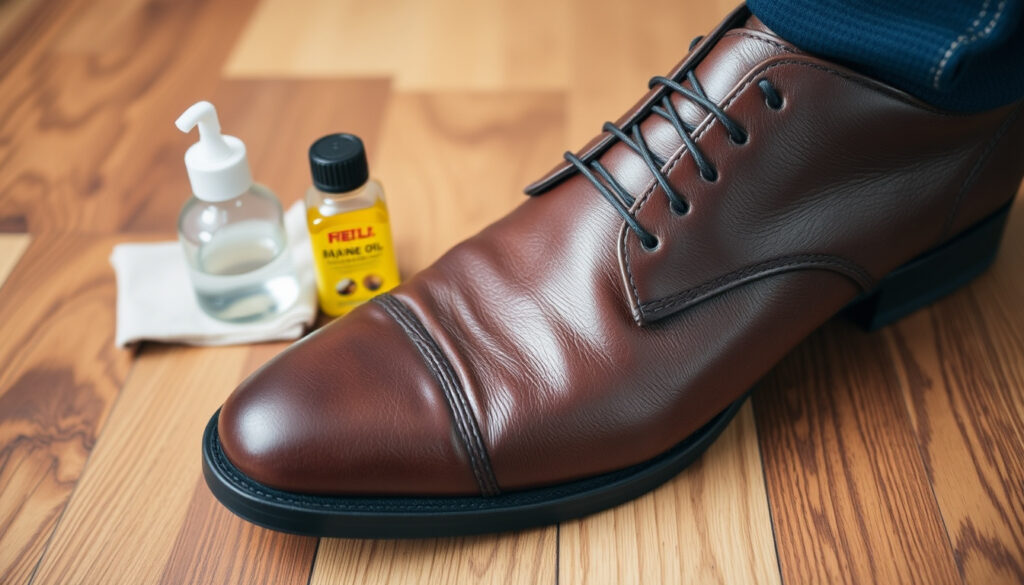
Stop Shoes from Squeaking: 5 Tested Fixes That Work
Few things ruin a confident stride like a rhythmic squeak from your shoes, drawing unwanted attention whether at the office, on a date, or down a quiet hallway. This guide pulls together real-world fixes from Reddit communities and official brand recommendations from Nike, Clarks, and Timberland so you can silence your shoes fast—and keep them quiet.
Most common DIY fix: Paper towel under the insole · Nike official solution: Petroleum jelly or coconut oil on insole bottom · Clarks method for parents: Drying shoes + baby powder or cornflour · Foot Locker quick fix: Baby powder, talcum powder, or cornstarch under insole · Primary cause (Think!): Moisture trapped between layers
Quick snapshot
- Remove insole and apply baby powder (YouTube tutorial)
- Place paper towel under insole (Reddit r/lifehacks)
- Wipe sole with damp cloth and dry thoroughly (Clarks UK)
- Tighten laces to reduce tongue rub (Zerorez)
- Apply leather conditioner in circular motions to creases (Zerorez)
- Talcum powder on leather lining (Nicks Boots)
Five key facts sum up everything you need to know before reaching for a fix.
| Fact | Detail |
|---|---|
| Top recommended fix by Reddit users | Paper towel under insole (tested, 2.9k upvotes) |
| Official brand solution | Nike: petroleum jelly or coconut oil on insole (Nike.com) |
| Most common cause | Moisture trapped between layers (Think! Shoes Magazine) |
| Natural break-in period | New shoes often stop squeaking after 2–3 wears (Brooks Running) |
| Avoidable product | WD-40 can damage rubber – use dry lubricants instead (Ask Team Clean) |
| Dry lubricant effectiveness | Baby powder lasts 1–3 walks; reapply as needed (Atoms.com) |
How do I get my shoes to stop squeaking when I walk?
This is the most-asked version of the question, and the answer usually starts with removing the insole.
Remove and dry the insole
- Pull out the insole and let it air dry separately for 24 hours (Nike.com).
- Stuff the shoe with newspaper to wick moisture from inside.
- If the insole is glued, use double-sided tape to re-secure it (Atoms.com).
Apply a dry lubricant (baby powder, cornstarch)
- Sprinkle baby powder, cornstarch, or baking soda under the insole and shake to distribute (Clarks UK).
- This reduces friction between the insole and the sole without damaging materials.
Lubricate with petroleum jelly or coconut oil
- Apply a thin layer of petroleum jelly or coconut oil to the bottom of the insole (Nike.com).
- Let it soak in for 10 minutes before reinserting.
The pattern: quick fixes like the paper towel trick solve most squeaks, but if the noise returns, address the underlying moisture problem.
Why do my boots squeak when I walk?
Boots often squeak from different spots than sneakers. The cause can be moisture, friction, or loose parts.
Moisture trapped between sole and insole
- If your boots got wet, remove insoles and dry them separately for 24–48 hours (Think! Shoes Magazine).
- Baking soda can speed up moisture absorption.
Friction between leather and rubber
- Dried-out leather creaks when flexed. Apply leather conditioner in circular motions to creases (Zerorez).
- Rub conditioner for at least 20 minutes to restore flexibility.
Loose insole or tongue movement
- Tighten laces – a loose tongue rubbing against the vamp creates a squeak. Nicks Boots recommends adjusting lacing pressure.
- Secure insoles with adhesive strips or double-sided tape (Atoms.com).
The pattern: boot squeaks almost always come from one of three friction points – between the sole and insole, within the leather, or where the tongue meets the upper. Identify the spot first, then apply the fix.
Will squeaky new shoes stop squeaking?
Many people hope the noise will go away on its own. Sometimes it does – but not always.
Natural break-in period
- Brooks Running notes that new shoes often stop squeaking after 2–3 wears as materials settle (Brooks Running).
- If the squeak is from a rubber sole rubbing a floor finish, it may disappear as the sole wears down.
When to intervene
- If the squeak persists beyond the third walk, don’t wait. The longer moisture sits, the more it swells the insole (Nike.com).
- Nike advises that new shoes that squeak from the start usually need a dry lubricant.
The trade-off: letting a squeak break in naturally risks permanent damage if moisture is the cause. The safe bet is to dry and powder after the second wear.
Does WD-40 work on squeaky shoes?
WD-40 is a common go-to for mechanical squeaks, but shoes are not machines.
Risks of using WD-40 on rubber
- WD-40 can break down rubber and adhesives, causing soles to delaminate (Ask Team Clean).
- It may leave a greasy residue that attracts dirt.
- Zerorez mentions silicone spray (which includes WD‑40) as a temporary fix only for rubber parts, not for leather or fabric (Zerorez).
Safe alternatives
- Dry lubricants (baby powder, cornstarch) work without damaging materials.
- Silicone spray is safer than penetrating oil, but must be applied sparingly and avoided on suede.
- Foot Locker recommends cornstarch or talcum powder over any spray lubricant (Foot Locker Inspiration).
The catch: WD-40 may silence the squeak for a day, but the long-term cost is material degradation. Every major brand guide – Nike, Clarks, Timberland – advises against it.
How to stop shoes from squeaking on waxed floors?
Smooth soles on glossy floors create a vacuum-and-release effect that amplifies noise.
Clean the sole with mild soap
- Dirt and polish residue can increase grip noise. Wipe with a damp cloth and mild soap (Vessi Shoe Guide).
- Dry thoroughly before walking.
Apply a thin layer of baby powder to the sole
- A light dusting on the outsole reduces rubber-on-wax friction (Clarks UK).
- For stubborn squeaks, lightly sand the sole with fine-grit sandpaper in a crosshatch pattern (Atoms.com).
Upsides
- All methods use household items (baby powder, paper towel, petroleum jelly)
- Most fixes take under 10 minutes
- No special tools or shoe repair required
- Approaches are endorsed by major brands (Nike, Clarks, Timberland)
Downsides
- Fixes may need reapplication after each walk
- WD-40 damages rubber long-term
- Leather conditioners require 20+ minutes of rubbing
- Tongue squeaks can be persistent and hard to locate
Step-by-step: how to fix a squeaky shoe in 10 minutes
- Remove the insole. Check for moisture or loose edges. If wet, dry separately for 24 hours.
- Apply a lubricant. Sprinkle baby powder or cornstarch under the insole. For leather, rub in conditioner.
- Reinsert the insole. Press firmly. Use double-sided tape if the insole moves.
- Test on a hard floor. Walk 20 steps. If still squeaking, add petroleum jelly to the insole bottom (Nike.com).
- Let it set for 10 minutes before full wear.
What the experts say
“I just put a paper towel under my insole and it stopped the squeaking immediately.”
Reddit user dEEkAy2k9, r/lifehacks
“A thin layer of petroleum jelly or coconut oil applied to the bottom of the insole can reduce friction and stop the squeak.”
Nike Editorial Team, Nike.com
“Sprinkle baby powder or cornflour evenly inside the footbed, then press the insole back in.”
Clark’s Editorial, Clarks UK
“Baby powder, talcum powder, or cornstarch under the insole is a quick and effective way to absorb moisture and reduce friction.”
Foot Locker Inspiration, Foot Locker
Confirmed facts vs what’s unclear
Confirmed facts
- Removing the insole and drying it stops moisture-related squeaks (Nike.com)
- Baby powder reduces friction between insole and sole (Atoms.com)
- Petroleum jelly works as a temporary lubricant (Nike.com)
- New shoes may stop squeaking after breaking in (Brooks Running)
What’s unclear
- How long each fix lasts before needing reapplication
- Effectiveness of WD-40 long-term on shoe materials
- Whether tongue squeak can be permanently fixed
- Which floor types respond best to sanding vs powdering
Squeaky shoes are never a structural problem – they’re almost always a moisture or friction issue. For the average shoe owner, a paper towel under the insole will cost you 30 seconds and zero money. For leather boots, a 20-minute conditioner rub saves you from creaking for months. The brands that make your shoes have already tested these methods; the Reddit community has stress-tested them in real life. The choice is simple: dry it, powder it, or lubricate it – and walk on. For the office worker on polished floors, baby powder on the outsole is your best friend.
Frequently asked questions
Can I use olive oil instead of coconut oil for squeaky shoes?
Olive oil can go rancid and stain leather. Coconut oil is safer because it’s more stable and less likely to leave residue. Stick with mineral-based options like petroleum jelly for longevity.
How long does baby powder last as a fix?
Typically 1–3 walks before reapplication is needed. Moisture and friction gradually remove the powder. Reapply when the squeak returns.
Will a broken air bubble cause squeaking in running shoes?
Yes. A burst air unit or foam pocket inside the sole can create air compression noise. If your running shoe has a visible air bubble and it’s deflated, the fix is replacement – not powder.
Is it normal for leather soles to squeak on tile floors?
Yes. Smooth leather on polished tile creates a suction effect. A light sanding or baby powder on the sole reduces the noise without damaging the leather.
Can I wear squeaky shoes to fix them naturally?
You can, but only if the squeak is from a new sole breaking in. If it’s moisture-based, wearing them will only grind in the noise. At the first sign of a repeat squeak, intervene with powder.
Does the shoe’s manufacturing material affect squeaking?
Rubber outsoles, synthetic insoles, and leather uppers each react differently. Rubber on wax floors is the most common culprit. Leather on leather (like boots) creates creaking, not squeaking. Material pairing determines the fix.
How do I stop my heels from squeaking in the office?
Apply a thin layer of petroleum jelly to the heel pad inside the shoe. If the squeak is from the heel cap rubbing against the floor, use baby powder on the sole and walk on carpet for a few steps to distribute it.
More related posts
 Hayley Atwell: Age, Movies, Tom Cruise Relationship, Pregnancy
 Gene Principe: Career, Family, and the Red Face Mystery
 Latest US Visa Bulletin – August 2025 EB-2 Retrogression and EB-3 India Advances
 Lorenzo Lamas: Net Worth, Sobriety, Career & Family
 Denali Mountain: Facts, History, and Climbing Guide (2025)
 Barcelona vs Real Sociedad: Head-to-Head Record & Stats
 Morocco National Football Team: Rivalry, Records, 2026 WC
 Water Purification System Whole House – Top Picks and Costs