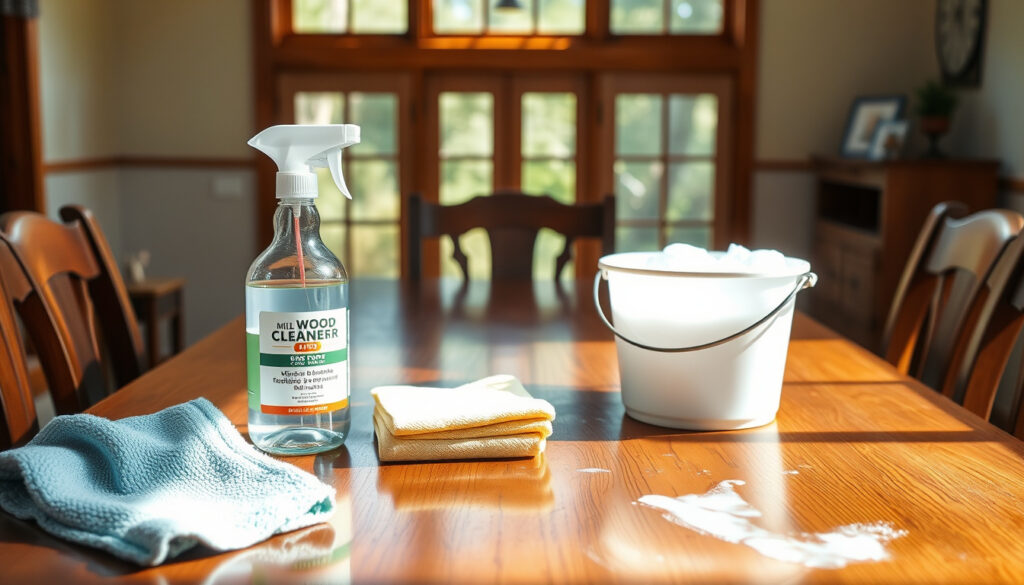
How to Clean Wood Furniture Properly: Safe Step-by-Step Guide
Dust settles on wooden surfaces fast—spilled coffee, fingerprints, and everyday grime follow close behind. Keeping wood furniture clean without stripping its finish takes a light touch and the right household ingredients.
Recommended cloth: Microfiber · Common solution base: Warm water + dish soap · Drying method: Dry cloth immediately · Tough spots: Methylated spirit · Frequency: Weekly dusting
Quick snapshot
- A microfiber cloth catches dust without scratching (Amish Furniture Factory)
- Diluted vinegar (1:10 vinegar to water) safely lifts grime from sealed wood (Amish Furniture Factory)
- Whether white spirit works safely on all finish types remains uncertain
- Dish soap effects on wood varnish lack definitive testing data
- Spot-test every solution on a hidden area first (Amish Furniture Factory)
- Condition wood after cleaning with mineral oil, wax, or polish (Amish Furniture Factory)
- Follow the step-by-step sections below for daily care, deep cleaning, and natural methods
Key specs and ratios appear in the table below.
| Item | Detail |
|---|---|
| Safe cloth | Microfiber |
| Basic solution | Warm water + few drops dish soap |
| Tough clean | Methylated spirit |
| Polish option | Murphy Oil Soap |
| General vinegar ratio | 1:10 vinegar:water |
| Baking soda paste mix | 1 tsp baking soda + few drops water |
| Finish-safe for vinegar | Sealed wood only |
| Avoid on these finishes | Shellac, lacquer, wax |
What is the best thing to clean wood furniture with?
The most reliable daily cleaner for sealed wood is a damp microfiber cloth paired with a simple dish soap solution. For deeper cleans, diluted white vinegar handles grease and grime without the harsh chemicals found in many commercial products.
Microfiber cloths
A microfiber cloth traps dust and debris without dragging particles across the surface that could cause micro-scratches. Lightly dampen the cloth—never soaking wet—and wipe in the direction of the wood grain. Dry immediately with a second cloth to prevent moisture rings.
Dish soap solutions
Mix a few drops of mild dish soap into warm water. Dampen your cloth, wring it out well, and wipe the surface gently. This solution works well for regular maintenance on sealed wood that isn’t heavily soiled. Rinse with a clean, damp cloth afterward and dry right away.
Commercial options
Products like Murphy Oil Soap are formulated specifically for wood and offer a middle ground between homemade solutions and stronger cleaners. Follow the product instructions and always spot-test on an underside or hidden area first.
For sealed wood in good condition, a microfiber cloth and dish soap handle 90% of cleaning needs without any risk to the finish.
What should you not clean wood with?
Protecting a wood finish starts with knowing what to avoid. Certain products and practices cause irreversible damage—scratches, haze, or softening of the protective coating.
Harsh chemicals
Avoid caustic soda and hydrogen peroxide, which can strip or discolor wood finishes (Greyge). Vinegar in undiluted form burns varnish and leaves a cloudy haze on the surface, according to Amish Furniture Factory.
Excess water
Wood absorbs moisture quickly. Never leave standing water on a surface or use a soaking-wet cloth. After wiping, always dry immediately with a clean cloth to prevent water rings from penetrating the finish.
Abrasive materials
Steel wool, scouring pads, and coarse scrubbers scratch through finishes and into the wood itself. Even baking soda, though mild, should only be used as a paste for spot treatment—not as a general-purpose scrub applied directly on wood.
Shellac, lacquer, and wax finishes are particularly vulnerable to acidic cleaners like vinegar, which can soften or turn white on contact (Amish Furniture Factory). Identify your finish type before choosing a cleaning method.
What is a natural cleaner for wood?
Household ingredients like white vinegar and baking soda offer effective, low-cost alternatives to commercial wood cleaners. Used correctly, they tackle grease, grime, and light stains while keeping most sealed finishes intact.
Vinegar mixtures
White vinegar cuts through grease and acts as a mild disinfectant. For general cleaning on sealed wood, dilute it at a 1:10 ratio (vinegar to water) using distilled water to avoid mineral deposits (Amish Furniture Factory). Apply by misting the solution onto your cloth first—never directly on the wood—then wipe with the grain.
Baking soda pastes
Baking soda is mildly abrasive, so it’s only suitable as a paste for spot-treating stubborn stains. Mix 1 teaspoon of baking soda with a few drops of water until it forms a thick paste. Apply with your fingertip using gentle circular motions, let it sit, then rinse and dry thoroughly (Amish Furniture Factory).
Olive oil blends
A homemade polish combining ½ cup white vinegar, ¼ cup olive oil, and 1 tablespoon of lemon juice conditions wood after cleaning and adds a gentle shine (Scratch Mommy). Shake well before use, apply a small amount to a cloth, and buff in the direction of the grain.
What’s the best homemade wood cleaner?
The best homemade cleaner depends on what you’re cleaning and the finish type. For everyday maintenance, a simple vinegar-water solution works. For stuck-on grime or light stains, a targeted paste treatment does the job without risking the surrounding finish.
Vinegar and oil recipe
Combine ½ cup white vinegar, ¼ cup olive oil, and 1 tablespoon lemon juice. This mixture both cleans and conditions, leaving wood with a soft sheen. Use it after the surface is already clean and dry—never as a primary cleaner on dirty wood.
Baking soda scrub
For tough spots like coffee stains, apply a baking soda paste (baking soda + water) and let it sit for 5–6 hours before rinsing (Greyge). This gives the mild abrasive time to lift the stain without harsh chemicals. Test first on an inconspicuous area.
Lemon solutions
Lemon juice adds natural degreasing power and a fresh scent. Mix it with water or vinegar for a lighter cleaning solution, but avoid using pure lemon juice directly on wood—it can be too acidic for some finishes.
Never mix vinegar and baking soda directly on wood. Their chemical reaction cancels out cleaning power and leaves a salty residue that attracts dust (Amish Furniture Factory). Apply each separately and rinse between uses.
How to clean wood furniture without removing finish?
Preserving the finish comes down to three habits: dust before you clean, test every solution first, and dry immediately after wiping. These small steps prevent damage that often looks like finish failure but is actually a cleaning mistake.
Step-by-step dusting
Dust with a dry microfiber cloth before applying any liquid. Loose particles act like fine sandpaper when dragged across the surface with a damp cloth, causing fine scratches that dull the finish over time.
Gentle wiping techniques
Mist your cleaning solution onto the cloth rather than the wood itself. Wipe in long, smooth strokes following the grain direction. For sticky spots, let a damp cloth sit on the area for a minute to loosen the residue before wiping away.
Drying tips
Keep a dry microfiber cloth nearby. After each wipe pass with a damp cloth, follow immediately with the dry cloth to absorb any remaining moisture. Never let wood air-dry on its own.
Step-by-step cleaning process
A consistent routine keeps wood furniture looking its best without risking finish damage. Follow these steps in order for best results.
- Dust first. Use a dry microfiber cloth to remove loose dust and debris.
- Spot-test. Apply your chosen solution to a hidden area (underside of a table, inside cabinet) and wait 5 minutes.
- Prepare solution. For vinegar: mix 1 part vinegar with 10 parts distilled water. For dish soap: a few drops in warm water.
- Apply to cloth. Mist the solution onto your microfiber cloth—never directly on wood.
- Wipe with grain. Work in long strokes following the wood grain direction.
- Rinse if needed. For baking soda paste or stronger cleaning, follow with a damp cloth to remove residue.
- Dry immediately. Use a dry microfiber cloth to absorb any remaining moisture.
- Condition. Once dry, apply mineral oil, wax, or polish to restore moisture and protection.
What we know vs what we don’t
Confirmed facts
- Microfiber and damp cloth are the standard for safe wood cleaning
- Diluted dish soap is safe in small quantities on sealed wood
- Vinegar diluted 1:10 removes grime without damaging sealed finishes
- Baking soda paste works for spot treatment of stubborn stains
- Excess water causes moisture rings and finish damage
What remains unclear
- Whether methylated spirit is safe on all finish types
- How dish soap affects different varnish formulations over time
- Long-term effects of repeated vinegar use on various sealers
Expert perspectives
“Never mix vinegar and baking soda directly on wood because their reaction cancels out their cleaning power and can leave residue.”
— Amish Furniture Factory (Furniture Experts)
“Vinegar is acidic so always dilute it with water to avoid damaging the wood—less is more when it comes to vinegar.”
— Jeff, Home Solution Specialist (Furniture Mall)
“A diluted mixture of distilled white vinegar and water (1:10 ratio) is one of the most effective homemade cleaners for sealed wood surfaces.”
— Amish Furniture Factory (Furniture Experts)
Summary
Cleaning wood furniture properly comes down to gentle methods, proper dilution, and finish-aware technique. A microfiber cloth, diluted vinegar, and baking soda paste cover most household cleaning needs without commercial products. Spot-testing every solution and drying immediately protect the finish from the most common damage causes. For homeowners, the choice is clear: stick to mild, diluted solutions, test first on hidden areas, and condition after every deep clean to keep wood looking its best for years.
Related reading: How to Clean Wood Furniture with Vinegar and Baking Soda · Clean Wooden Furniture: Effective Natural Remedies
youtube.com, builtincabinet.com, youtube.com, scratchmommy.com
Proper cleaning preserves the finish on cherished pieces, and sourcing from Icon By Design solid wood ensures markup-free quality for lasting beauty.
Frequently asked questions
Is vinegar safe for cleaning wood furniture?
Yes, but only when diluted. A 1:10 ratio (vinegar to water) is safe for sealed wood surfaces. Never use undiluted vinegar, as it can burn the finish and leave a cloudy haze.
Can baking soda damage wood finishes?
Baking soda is mildly abrasive, so it can scratch finishes if used improperly. Use it only as a paste for spot-treating stubborn stains, and always rinse and dry thoroughly afterward.
How often should you clean wood furniture?
Dust weekly with a microfiber cloth for regular maintenance. Deep cleaning with a mild solution every few months is usually sufficient for furniture in normal household use.
What is methylated spirit used for on wood?
Methylated spirit is used for tougher cleaning jobs, such as removing sticky residues or old wax buildup. Use it sparingly and test on a hidden area first, as it can affect some finishes.
Are commercial polishes necessary?
No—they are optional. Regular conditioning with mineral oil, olive oil, or purpose-built wood wax keeps finishes protected. Commercial polishes offer convenience but homemade options work just as well.
How to remove sticky residue from wood?
Dampen a cloth with warm, soapy water and let it sit on the sticky area for a minute to loosen the residue. Wipe clean, then dry immediately. For stubborn residue, a small amount of methylated spirit on a cloth can help.
Can dish soap damage wood varnish?
Mild dish soap in small amounts is generally safe for sealed wood. However, frequent use or heavy concentrations may leave a residue that dulls the finish over time. Always wring out your cloth well and dry after cleaning.
More related posts
 Lorraine Warren: Biography, Death, Powers and Real Cases
 199 USD to CAD – Convert US Dollars to Canadian Dollars
 Emma Maltais: Biography, Career & Key Facts
 Real Canadian Superstore Flyer: This Week’s Deals Guide
 Sherri Papini: The Kidnapping Hoax, Polygraph, and Documentary
 Celeste Rivas Hernandez: Latest Verified Information and Case Timeline
 Eric Lindros: Career, Concussions, and Legacy
 Zach Hyman: Salary, Wife, Children, Books & Law Career