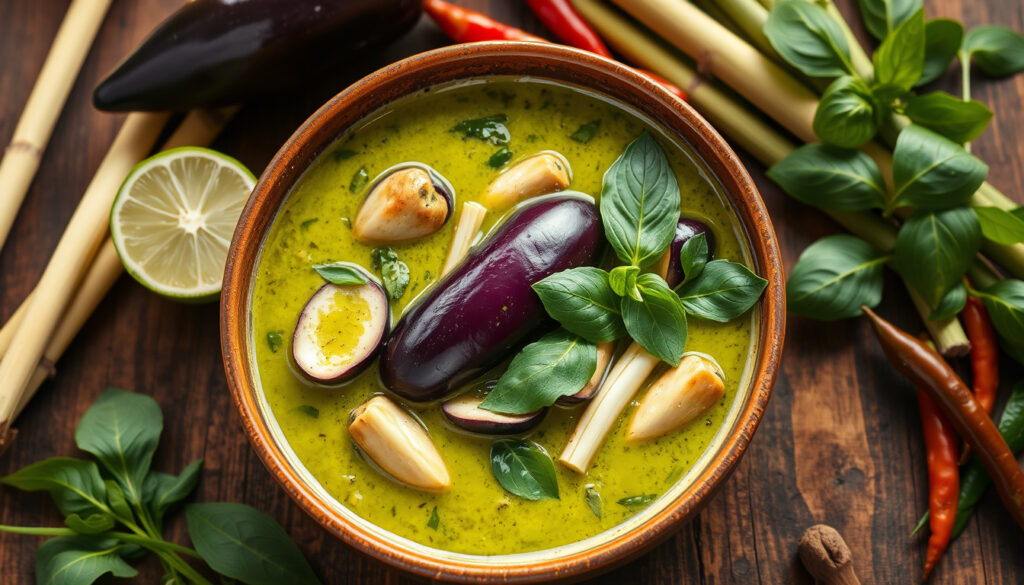
Thai Green Curry Recipe – Authentic Step-by-Step Guide
Authentic Thai Green Curry Recipe (Easy Gaeng Khiao Wan) – Step-by-Step Guide
Thai green curry, known as Gaeng Khiao Wan Gai, is a vibrant dish that brings together spicy, sweet, salty, and sour flavors in perfect balance. The name translates to “sweet green curry with chicken,” and the characteristic pale green hue comes from fresh green Thai chilies in the paste. While the traditional method involves pounding a homemade curry paste in a mortar and pestle, this guide covers everything from scratch-made authenticity to approachable shortcuts for home cooks of any skill level.
Key Steps for Success
- Fry the curry paste in coconut cream until the oil separates and the fragrance develops fully—this step cannot be skipped for authentic flavor
- Use free-range chicken thighs for the best texture and taste
- Add vegetables such as Thai eggplant only in the final 5 minutes to prevent bitterness
- Balance all four Thai flavors iteratively: fish sauce for salt, palm sugar for sweetness, lime leaves for sourness, and chilies for heat
- Let the finished curry rest covered for 10 minutes off the heat to allow flavors to meld
- Adjust spice level by varying the number of green chilies in the paste or adding fresh chilies during cooking
- Do not rush the paste frying process—patience here is essential for proper flavor development
| Fact | Details |
|---|---|
| Origin | Central Thailand (Gaeng Khiao Wan) |
| Key Flavor Profile | Fresh green chilies, Thai basil, coconut milk |
| Calories per Serving | Approximately 400-500 |
| Spice Level | Medium-Hot |
| Traditional Cooking Method | Pounded mortar and pestle paste |
| Storage Life | 3-4 days refrigerated, 1-2 months frozen |
What Are the Key Ingredients for Authentic Thai Green Curry?
Authentic Thai green curry starts with a carefully assembled set of ingredients that deliver the dish’s signature complexity. The foundation is the green curry paste, traditionally made by pounding fresh ingredients in a mortar and pestle. Core paste ingredients include 10-15 green Thai chilies, 2-3 garlic cloves, 2 Asian shallots, 1 tablespoon galangal, 1/8 cup lemongrass, 2 teaspoons cilantro roots, 2 teaspoons makrut lime zest, 1 teaspoon each roasted cumin and coriander seeds, 10-15 white peppercorns, 1 teaspoon salt, and 1 tablespoon shrimp paste added last. Roasting the cumin and coriander seeds before pounding enhances their aroma significantly.
Homemade vs Store-Bought Curry Paste
Making curry paste from scratch takes approximately 1.5 hours but produces noticeably superior results. The pounding order matters: chilies and garlic first, then softer ingredients, with shrimp paste added last. Store-bought paste works adequately—use 2-6 tablespoons per recipe—but requires longer frying in the coconut cream to develop proper flavor. Some cooks blend homemade and store-bought pastes for depth and convenience.
The Curry and Chicken Components
Beyond the paste, the dish calls for 1 pound boneless chicken thighs or 1 whole free-range chicken chopped, 1-3 cans coconut milk or cream (using the thick cream first), 2-3 tablespoons fish sauce, 1-3 tablespoons palm sugar, 3-6 makrut lime leaves torn or shredded, 4-10 Thai eggplants quartered, 1 cup Thai basil leaves, and optionally 2-5 red spur chilies sliced. Vegetable alternatives include green beans or broccoli if Thai eggplant is unavailable.
If Thai basil is unavailable, omit it entirely rather than substituting sweet basil, as the flavor profiles differ substantially and will alter the dish’s authentic character.
What Is the Difference Between Green and Red Thai Curry?
The distinction between green and red Thai curry lies primarily in the chilies used and the resulting flavor profile. Green curry utilizes fresh green Thai chilies, which create a brighter green color and deliver a grassier, more herbaceous heat. Red curry, known as Gaeng Phed Gai, employs dried red chilies that produce a deeper red hue and a smokier, more intense spice. Both curries are coconut-based and share similar foundational ingredients, but green curry tends to be sweeter and more aromatic, while red curry carries greater heat intensity.
Spice Level Considerations
Thai green curry registers as medium-hot on most scales, though authentic versions in Thailand often run significantly hotter than Western adaptations. Spice control is achieved by adjusting the quantity of green chilies in the paste—typically 3-15 depending on desired heat—and by adding whole fresh chilies during cooking. Those seeking milder results can reduce chilies in the paste and omit the optional red spur chilies entirely.
When to Choose Green vs Red Curry
Green curry’s herbaceous qualities make it ideal for dishes featuring chicken, seafood, or lighter vegetables. Red curry’s deeper spice pairs well with richer proteins like beef and pork. For those new to Thai cuisine, green curry often serves as the more approachable introduction due to its balanced sweetness.
Vegetarian and Vegan Thai Green Curry Variations
Adapting Thai green curry for vegetarian and vegan diets requires straightforward ingredient swaps without compromising the dish’s core flavors. The primary modifications involve replacing fish-based seasonings and adjusting protein sources while maintaining the aromatic complexity that defines the curry.
Making It Vegetarian
Vegetarian versions omit fish sauce and shrimp paste entirely. Soy sauce or tamari (2-3 tablespoons) provides the necessary saltiness and umami depth. All other ingredients—coconut milk, curry paste (checking that store-bought versions contain no fish products), vegetables, and aromatics—remain the same. The cooking process and technique remain unchanged.
Fully Vegan Adaptations
Vegan preparations follow the same approach as vegetarian, with the additional substitution of palm sugar for coconut sugar. Protein options expand to include tofu, mushrooms, broccoli, or green beans in place of chicken. The result maintains the herbaceous, slightly sweet profile that characterizes green curry while remaining completely plant-based.
When Thai eggplant is unavailable, green beans, broccoli, or pea eggplants work well. If makrut lime leaves cannot be sourced, lemon zest offers a less ideal but functional alternative. Store-bought paste quantities range from one-third to 6 tablespoons depending on brand potency.
How Long Does Thai Green Curry Take to Make?
From start to finish, a complete Thai green curry recipe requires approximately 40 minutes, with 15 minutes dedicated to preparation and 25 minutes for cooking. Those choosing to make homemade curry paste from scratch should add another 1.5 hours to the timeline. The following breakdown outlines each stage of the cooking process.
- Prep ingredients (10 minutes): Gather and measure all components, slice vegetables, and prepare aromatics
- Make paste if homemade (5-90 minutes): Pound ingredients in mortar and pestle following the proper order, or measure store-bought paste
- Cook curry base (10 minutes): Fry garlic and chilies if using, add paste, fry until fragrant and darkened
- Add proteins and vegetables (10 minutes): Introduce chicken, coconut milk, seasonings, and vegetables in proper sequence
- Simmer and serve (5 minutes): Allow curry to finish cooking, rest covered, and serve over jasmine rice
Authenticity and Flexibility in Thai Green Curry
Established Practices
- Pounding paste in mortar and pestle preserves texture and releases oils properly
- Frying paste in coconut cream until oil separates creates authentic flavor
- Four-flavor balance—salty, sweet, sour, spicy—defines the dish
- Thai basil and makrut lime are essential aromatics
- Eggplant is the traditional vegetable, cooked briefly to avoid bitterness
- Free-range chicken produces superior texture
Flexible Adaptations
- Store-bought paste works adequately for beginners
- Various proteins (beef, pork, prawns, tofu, mushrooms) substitute successfully
- Vegetable choices expand to include broccoli, green beans, bamboo shoots
- Spice levels adjust freely based on personal preference
- Homemade paste may be prepared ahead and frozen for convenience
- Cooking times vary slightly based on protein type and cut
Origins of Thai Green Curry
Thai green curry hails from central Thailand and stands as one of the most popular Thai curries worldwide. The dish exemplifies the Thai culinary philosophy of balancing spicy, sweet, salty, and sour flavors in a single preparation. The paste’s green color derives entirely from fresh green chilies, distinguishing it from curries that incorporate additional green vegetables or herbs. This central Thai origin influences the dish’s emphasis on aromatic freshness and the prominence of coconut milk’s creamy texture.
Traditional preparation emphasizes the mortar and pestle method, which bruising rather than cutting the ingredients releases different flavor compounds. This technique dates back centuries in Thai cooking and remains the standard for those seeking authentic results. The practice of roasting cumin and coriander seeds before pounding further demonstrates how traditional Thai cuisine layers flavors through technique as much as ingredient selection.
Skipping the paste frying step results in raw garlic and shallot flavors dominating the dish. Overcooking vegetables, particularly eggplant, causes them to turn bitter. Using sweet basil instead of Thai basil fundamentally alters the flavor profile. Rushing the simmer prevents proper coconut milk separation, which is essential for achieving the creamy, layered texture characteristic of authentic curry.
What Experts Say About Thai Green Curry
“The paste is traditionally pounded in a mortar and pestle from fresh ingredients like green chilies, shallots, garlic, galangal, lemongrass, kaffir lime peel, cilantro roots, cumin, coriander, white peppercorns, and shrimp paste.”
“Thai green curry hails from central Thailand and is one of the most popular Thai curries worldwide, valued for balancing spicy, sweet, salty, and sour flavors.”
“Roasting cumin and coriander seeds enhances aroma before pounding.”
What to Serve With Thai Green Curry
Thai green curry traditionally accompanies jasmine rice, which absorbs the creamy coconut sauce beautifully. Garnish with additional Thai basil leaves and sliced red chilies for presentation and extra flavor. The curry also pairs well with roti bread for a Malaysian-influenced fusion approach, or with rice noodles for a different textural experience. For meal preparation purposes, the dish stores excellently—refrigerate in an airtight container for 3-4 days or freeze for 1-2 months. Reheat with a splash of coconut milk to restore the sauce’s consistency.
A helpful reference for measuring ingredients precisely is available: 1/3 Cup in Tbsp – 5 Tbsp + 1 Tsp Exact Conversion. When preparing larger batches for meal prep, accurate measurements ensure consistent results across multiple servings.
Frequently Asked Questions
Is Thai green curry healthy?
Thai green curry offers nutritional benefits when consumed in moderation. The dish provides protein from chicken, healthy fats from coconut milk, and vitamins A, C, and K from basil, chilies, and eggplant. Anti-inflammatory properties come from spices like galangal and lemongrass. However, sodium from fish sauce should be monitored, and those with dietary restrictions can adjust seasoning accordingly.
What specific ingredients make Thai green curry with chicken?
For four servings, use 1 pound boneless chicken thighs, 2 cans coconut milk, 3 tablespoons green curry paste, 2 tablespoons fish sauce, 2 tablespoons palm sugar, 4 quartered Thai eggplants, 1 cup Thai basil, and torn makrut lime leaves. Adjust proportions based on serving size and personal preference.
How do you reduce the spice in Thai green curry?
Reduce spice by using fewer green chilies in the paste (3-5 instead of 10-15), omitting optional red spur chilies, and selecting milder store-bought paste brands. Adding extra coconut milk or a touch of sugar also tempers heat without losing the curry’s character.
Can Thai green curry be made without curry paste?
While traditional recipes require curry paste, a simplified version can approximate the flavor by using green chilies, garlic, shallots, and Thai seasonings. However, this approach lacks the complexity of the full paste and produces noticeably different results from authentic preparations.
What does Thai green curry taste like?
Thai green curry delivers a complex profile combining spicy heat from green chilies, sweetness from palm sugar and coconut milk, saltiness from fish sauce, and sour notes from makrut lime leaves. The overall taste is herbaceous, aromatic, and creamy with a distinct freshness from Thai basil.
How do you make vegan Thai green curry?
Replace chicken with tofu, mushrooms, or vegetables like broccoli and green beans. Substitute fish sauce with soy sauce or tamari, replace palm sugar with coconut sugar, and ensure the curry paste contains no fish products. All other preparation steps remain identical to the traditional recipe.
More related posts
 Where the Crawdads Sing: True Story, Killer & Ending Explained
 Brandon Ingram: Injury, Personal Life, Stats, and Contract
 David Muir Biography: Career Facts and Personal Privacy
 TV Wall Mounting Cost Ireland 2025
 Liam Gallagher: Diagnoses, Divorces, Net Worth, and Sobriety
 National Park Pass Canada 2026: Prices, Free Options & How to Buy
 Stephen Merchant: Biography, Net Worth & Career Facts
 The Fate of Ophelia Lyrics – Taylor Swift Song Analysis