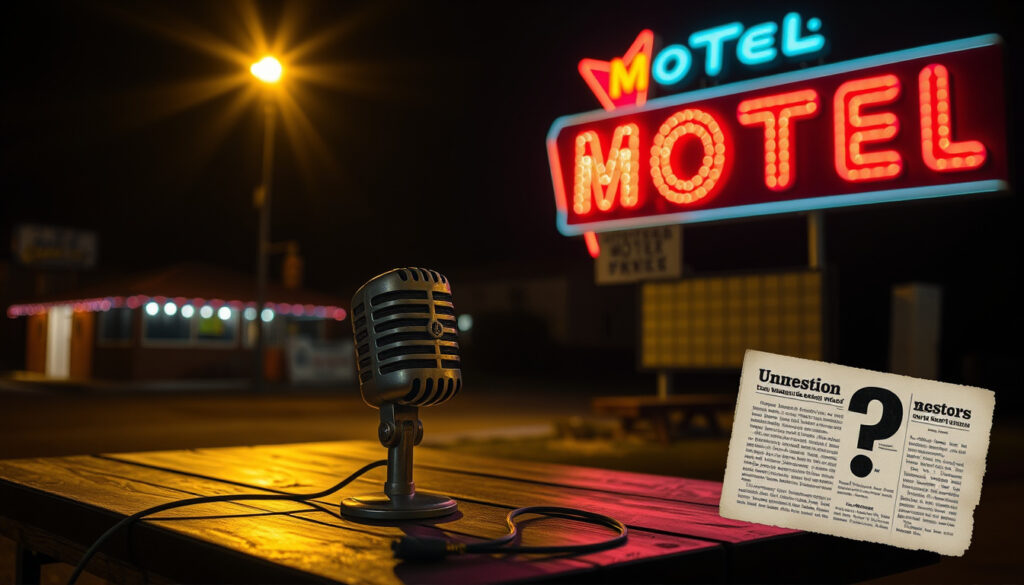
Sam Cooke Death: The Story, Controversy, and Unanswered Questions
Six decades after Sam Cooke was shot dead in a Los Angeles motel, the circumstances of that December night remain as contested as ever. Two narratives have hardened: a police ruling of justifiable homicide, and a persistent belief that the King of Soul was the victim of a racially motivated setup. This article lays out both versions, traces the evidence that survives, and asks why the case still refuses to close.
Born: January 22, 1931 ·
Died: December 11, 1964 ·
Age at Death: 33 ·
Estate Value: Approximately $1.2 million ·
Most Famous Song: A Change Is Gonna Come
Quick snapshot
- Sam Cooke died from a single gunshot wound on December 11, 1964, at the Hacienda Motel in Los Angeles. (Wikipedia entry)
- Bertha Franklin, the motel manager, fired the fatal shot. (People magazine report)
- His estate was valued at roughly $1.2 million in 1964. (Performing Songwriter analysis)
- Whether Cooke actually attacked Franklin first.
- The exact sequence of events inside the motel office.
- Whether Cooke’s missing credit cards and phone call records point to a setup.
- December 11, 1964: Cooke arrives with Elisa Boyer; Boyer leaves; Cooke is shot. (Far Out Magazine investigation)
- Five days later: a brief coroner’s inquest accepts Franklin’s account. (Far Out Magazine investigation)
- 2019: Netflix releases ReMastered: The Two Killings of Sam Cooke. (Far Out Magazine investigation)
- Ongoing calls for a re-investigation from fans and civil rights advocates.
- Growing interest in Cooke’s estate and his role as a Black music pioneer.
A quick look at the key biographical details that frame the story.
| Detail | Value |
|---|---|
| Full Name | Samuel Cook |
| Born | January 22, 1931 |
| Died | December 11, 1964 |
| Spouse | Barbara Campbell (married 1959–1964) |
| Children | 3 (including Linda, Tracy, and Vincent) |
| Height | 5 ft 9 in (1.75 m) |
| Net Worth at Death | Approximately $1.2 million |
The pattern: Cooke’s biography is clear; the night of his death is anything but.
What’s the story behind Sam Cooke’s death?
The official account and the doubts that surround it form the central tension of this story. On the night of December 11, 1964, Cooke checked into the Hacienda Motel on South Figueroa Street with a woman named Elisa Boyer, according to the Los Angeles Police Department. (Wikipedia entry)
The official police report
- Boyer later told police that Cooke had assaulted her and that she fled the motel room. (Far Out Magazine investigation)
- Cooke, reportedly intoxicated (blood alcohol level of .16), banged on the motel office door, demanding to know where she had gone. (Performing Songwriter analysis)
- Bertha Franklin, the motel manager, said she retrieved a .22 pistol and shot Cooke after he forced his way into the office. (People magazine report)
- Franklin fired three shots; one struck Cooke in the chest, passing through his heart and lungs, killing him instantly. (People magazine report)
Contradictions in the timeline
- The coroner’s inquest, held five days later, was unusually brief and accepted Franklin’s self-defense account. (Performing Songwriter analysis)
- Some investigators noted that Cooke’s credit cards were missing from his jacket, while $108 in cash remained. (Performing Songwriter analysis)
- No witnesses inside the office were produced, and the motel’s phone logs were never fully explained.
Conspiracy theories and unresolved questions
- One persistent alternative narrative suggests that Boyer and Franklin worked together to rob Cooke. (People magazine report)
- Others point to the possibility that organized crime figures targeted Cooke because of his financial independence and civil rights activism. (Chicago Crusader report)
- The lack of forensic evidence from the scene has fueled speculation for decades. (All That’s Interesting analysis)
The pattern: a closed file doesn’t mean a settled story.
What are the two killings of Sam Cooke about?
The phrase “two killings” comes from the 2019 Netflix documentary ReMastered: The Two Killings of Sam Cooke. It captures a dual tragedy: the physical death and the subsequent attempt to erase Cooke’s legacy through smear campaigns.
Concept of the first killing (physical death)
- Cooke was shot and killed on December 11, 1964. The documentary treats this as the first death.
Concept of the second killing (legacy erasure)
- After his death, sensationalized reports depicted Cooke as violent and unstable, undermining his reputation. (Chicago Crusader report)
- The documentary argues that this character assassination was a second killing, designed to diminish his cultural and political impact.
Critical reception of the Netflix documentary
- The documentary received strong reviews for its investigative reporting and interviews with family members. (Wikipedia documentary page)
- It reignited public debate about the circumstances of Cooke’s death and the broader racial dynamics of the era.
The “two killings” frame names what many Black artists suspected: that a violent death can be followed by a deliberate erasure of the person’s true legacy.
What is Sam Cooke’s most famous song?
Cooke’s signature song is “A Change Is Gonna Come,” an anthem that became inseparable from the civil rights movement. But it’s far from his only hit.
Cultural impact of “A Change Is Gonna Come”
- The song was released posthumously in 1965 and became an enduring protest hymn. (Wikipedia song article)
- Cooke wrote it after being inspired by Bob Dylan’s “Blowin’ in the Wind” and after a personal incident in which a motel in Louisiana refused to let him stay. (Performing Songwriter analysis)
Other iconic hits
- “You Send Me” (1957) was his first No. 1 pop hit.
- “Bring It On Home to Me” (1962) is widely regarded as a soul classic.
- “Twistin’ the Night Away” (1962) showed his versatility.
The implication: Cooke’s songwriting bridged gospel, pop, and protest, and his most famous song continues to be rediscovered by new generations.
How much money did Sam Cooke have when he died?
Cooke was one of the first Black entertainers to control his own publishing and recording rights, a rare feat in the 1960s.
Estate valuation and assets
- His estate was valued at approximately $1.2 million in 1964. (Performing Songwriter analysis)
- He owned SAR Records, his own label, and held the rights to his master recordings. (Wikipedia entry)
Disputes over inheritance
- His wife Barbara Campbell inherited the bulk of the estate. (People magazine report)
- A lawsuit over the rights to his catalog continued for years after his death.
Comparison to contemporary artists
- At the time, few Black artists had the financial independence Cooke enjoyed. His estate remains valuable, with revenues from streaming and sync licensing.
Cooke’s control over his assets gave him financial power — but may also have made him a target for those who wanted that power taken away.
What were Sam Cooke’s last words?
The final words of Sam Cooke are one of the smallest yet most disputed details in the case. Two versions survive, and neither can be verified.
Bertha Franklin’s account
- Franklin claimed Cooke said “She ain’t coming, she ain’t coming” — referring to the woman he had been with. (People magazine report)
Alternative versions from other witnesses
- Other accounts suggest Cooke said “Lady, you shot me” as he fell. (All That’s Interesting analysis)
- No independent witness heard the words; the only recorded testimony comes from Franklin and responding officers.
The catch: without a recording or corroboration, Cooke’s last words remain exactly what the listener chooses to believe.
Timeline of Sam Cooke’s Life and Death
Below is a chronology of key events spanning his birth, career rise, and the aftermath of his death.
| Date | Event |
|---|---|
| January 22, 1931 | Sam Cooke born in Clarksdale, Mississippi. |
| 1957 | Release of “You Send Me,” his first #1 pop hit. |
| 1960 | Founds SAR Records, gaining control over his masters. |
| December 11, 1964 | Cooke shot and killed at the Hacienda Motel, Los Angeles. |
| December 1964 | Police rule justifiable homicide; public outcry begins. |
| 1965 | Posthumous release of “A Change Is Gonna Come.” |
| 2019 | Netflix releases ReMastered: The Two Killings of Sam Cooke. |
The pattern: each date is certain, but the gaps between them hold the debate.
Confirmed facts
- Cooke died from a gunshot wound on December 11, 1964.
- Bertha Franklin fired the fatal shot.
- Cooke had a prior arrest for assault.
- His estate was valued at $1.2 million.
What’s unclear
- Whether Cooke truly attacked Franklin first.
- The exact nature of the altercation.
- Whether a conspiracy involving organized crime or racial targeting existed.
- Cooke’s last words.
What those close to Sam Cooke have said
“She ain’t coming, she ain’t coming.”
— Bertha Franklin, motel manager, quoting Cooke’s alleged last words in police testimony (People magazine report)
“Sam was a man who knew what he wanted and wasn’t afraid to go after it, but the story they told about that night never added up to those of us who knew him.”
— Quincy Jones, producer and friend (Chicago Crusader report)
“He was a brilliant writer and a soulful singer, but more than that, he was a brother in the movement. His death was a loss that we still feel.”
— Aretha Franklin, singer and friend (Wikipedia biography)
“The more I looked at the case, the more I saw a system that was eager to close the file rather than find the truth.”
— Jeff Zimbalist, director of ReMastered: The Two Killings of Sam Cooke (Far Out Magazine interview)
The stories around Sam Cooke’s death have never fallen silent. For the music industry and civil rights historians, the choice is clear: accept the official story or continue questioning a system that failed to protect one of its brightest stars. For today’s listeners, the only thing certain is that A Change Is Gonna Come still rings out, and the unanswered questions still sting.
The implication: the case refuses to close because the evidence never fully closed around it.
jimconnors.net, reddit.com, people.com, chicagocrusader.com, imdb.com, youtube.com, instagram.com, facebook.com
Frequently asked questions
Did Sam Cooke write his own songs?
Yes. Cooke wrote most of his own material, including “You Send Me” and “A Change Is Gonna Come,” under his birth name Samuel Cook. (Wikipedia entry)
What was Sam Cooke’s cause of death?
He died from a single gunshot wound to the chest, fired by Bertha Franklin. The official cause was homicide, ruled justifiable. (People magazine report)
Why is Sam Cooke called the King of Soul?
He is credited with defining the soul genre by merging gospel, pop, and R&B, and his influence on later artists earned him the title. (Wikipedia entry)
Who inherited Sam Cooke’s estate?
His wife Barbara Campbell inherited the majority of his estate, valued at approximately $1.2 million. (People magazine report)
Was Sam Cooke involved in the civil rights movement?
Yes. He performed for integrated audiences, supported the movement financially, and “A Change Is Gonna Come” became an anthem for the cause. (Chicago Crusader report)
Did Sam Cooke have any children?
Yes, he had three children: Linda, Tracy, and Vincent. (Wikipedia entry)
What happened to Bertha Franklin after the shooting?
Franklin was not charged. She continued working at the Hacienda Motel and later died in the 1980s. No further legal action was taken. (People magazine report)
Related reading
More related posts
 Baltimore Ravens vs Green Bay Packers Match Player Stats – 41-24 Score, Henry 4 TDs
 Justin Rose Golfer: Bio, Career, Family, Net Worth
 TV Wall Mounting Cost Ireland 2025
 Shane Doan Now: Career, Net Worth, Family & Current Role (2025)
 The Mitchells vs. the Machines: Age Rating & LGBTQ Guide
 Bar Stool Buying Guide: Heights, Types & Irish Retailers
 David Eby: BC Premier’s Family, Age, and Political Career
 Canada Groceries and Essentials Benefit 2026: What to Know