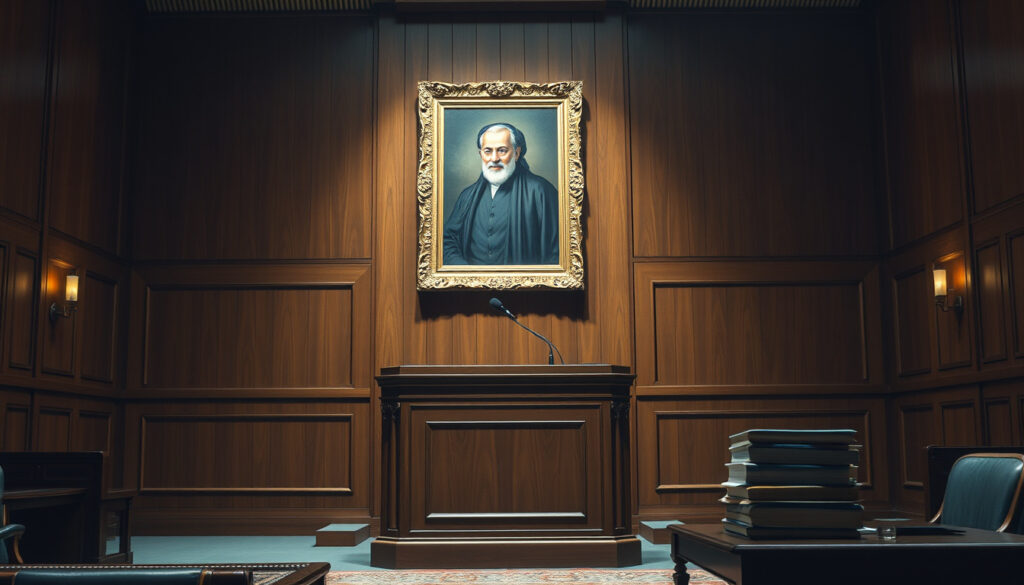
Ali Larijani: Iran’s Philosopher-Politician Assassinated
It’s not every day that a philosopher-politician becomes the de facto leader of a nation — and gets killed in an airstrike 17 days later. But that’s the arc of Ali Larijani, Iran’s backroom powerbroker, Shia cleric’s son, and the man who might have succeeded Ayatollah Khamenei. His assassination on March 17, 2026, didn’t just remove a key figure; it reshaped the balance of power in a region already on edge.
Born: 3 June 1958 · Died: 17 March 2026 · Role at death: Secretary of the Supreme National Security Council · Previous role: Speaker of Parliament (2008–2020) · Cause of death: Assassination during Israeli airstrike · Education: PhD in Philosophy
Quick snapshot
- Ali Larijani was a Shia Muslim (Britannica (encyclopedia))
- He was born in Najaf, Iraq, on 3 June 1958 (Britannica (encyclopedia)) (Britannica (encyclopedia))
- He served as Speaker of the Islamic Consultative Assembly (2008–2020) (Wikipedia (encyclopedic entry))
- He was assassinated on 17 March 2026 (Reuters (international news agency))
- Exact number of casualties in the same airstrike
- Full details of the chain of command that ordered the strike
- Ali Larijani’s net worth
- Precise circumstances of his daughter’s involvement
- Larijani became de facto leader after Supreme Leader Khamenei’s death on 28 February 2026 and died just 17 days later (Britannica (encyclopedia))
- Iran’s power structure faces a vacuum; possible consolidation under a hardline successor or factional fragmentation
Ali Larijani held multiple high‑profile roles in Iran over three decades. The table below captures the key biographical data confirmed by authoritative sources.
| Field | Value | Source |
|---|---|---|
| Full name | Ali Ardashir Larijani | Britannica (encyclopedia) |
| Date of birth | 3 June 1958 | Britannica (encyclopedia) |
| Place of birth | Najaf, Iraq | Britannica (encyclopedia) |
| Date of death | 17 March 2026 | Reuters (international news agency) |
| Place of death | Tehran, Iran | Reuters (international news agency) |
| Cause of death | Assassination (Israeli airstrike) | Reuters (international news agency) |
| Religion | Shia Islam | Britannica (encyclopedia) |
| Political party | Independent (affiliated with Principlists) | Wikipedia (encyclopedic entry) |
| Education | PhD in Philosophy, University of Tehran | Wikipedia (encyclopedic entry) |
| Spouse | Farideh Larijani | Wikipedia (encyclopedic entry) |
Is Ali Larijani a Shia or Sunni?
Ali Larijani’s family religious background
- Larijani was a Shia Muslim, a fact confirmed by his father’s position as an Ayatollah and his own education in Shia seminaries (Britannica (encyclopedia)).
- His father, Ayatollah Mirza Hashem Amoli, was a high‑ranking Shia cleric, placing the Larijani family firmly within Iran’s clerical establishment (Wikipedia (encyclopedic entry)).
Larijani clerical lineage
- The Larijani family is one of Iran’s most prominent political dynasties; his brother Sadeq Larijani headed the judiciary and is also a cleric (Al Jazeera (Qatari state‑funded news network)).
- Ali Larijani himself studied at the University of Tehran, earning a PhD in philosophy, but his religious roots are unequivocally Shia (Wikipedia (encyclopedic entry)).
Bottom line: Ali Larijani was a Shia Muslim, belonging to the Twelver branch, and his entire political and family identity is embedded in Iran’s Shia clerical establishment. The sectarian question is answered: Sunni speculation is unfounded.
Has Ali Larijani been assassinated?
Details of the assassination on 17 March 2026
- Multiple sources confirm that Larijani was killed overnight between March 16 and March 17, 2026, in an Israeli airstrike on a house in Tehran where he had sought refuge with his son (Reuters (international news agency)).
- Reuters reported that Iran’s semi‑official Fars news agency said Larijani was visiting his daughter in a Tehran suburb when he was killed (Reuters (international news agency)).
- Israel’s defense minister Israel Katz publicly claimed responsibility before Iran’s official confirmation (Reuters (international news agency)).
Who was responsible for the attack
- Israel claimed responsibility, and the Supreme National Security Council of Iran acknowledged Larijani’s killing (Al Jazeera (Qatari state‑funded news network)).
- The attack targeted a meeting of the Supreme National Security Council, where Larijani was present as secretary (Reuters (international news agency)).
Bottom line: Yes, Ali Larijani was assassinated on 17 March 2026 in an Israeli airstrike. His death was the highest‑profile killing of an Iranian official since the Islamic Revolution.
What is Ali Larijani’s background?
Early life and education
- Born in Najaf, Iraq, on 3 June 1958 to Ayatollah Mirza Hashem Amoli, he moved to Iran as a child (Britannica (encyclopedia)).
- He earned a PhD in philosophy from the University of Tehran and also studied in Qom seminaries (Wikipedia (encyclopedic entry)).
- His philosophical work includes translations and commentary on Western philosophy, especially Immanuel Kant (Al Jazeera (Qatari state‑funded news network)).
Political career and roles
- He served as head of Islamic Republic of Iran Broadcasting (IRIB) from 1994 to 2004 (Wikipedia (encyclopedic entry)).
- He was Secretary of the Supreme National Security Council (2005–2007) and later Speaker of Parliament (2008–2020) (Britannica (encyclopedia)).
- In August 2025, President Masoud Pezeshkian reinstated him as SNSC secretary, a position he held until his death (Al Jazeera (Qatari state‑funded news network)).
- After Supreme Leader Khamenei’s death on 28 February 2026, Larijani became the de facto leader of Iran, serving for just 17 days (Britannica (encyclopedia)).
Bottom line: Larijani was a rare combination: a philosopher‑politician with deep Shia clerical roots and a pragmatic security worldview. His career spanned media, diplomacy, and parliamentary leadership, making him the most powerful figure after Khamenei’s death.
Which Iranian prime minister was assassinated?
Historical assassinations of Iranian leaders
- Ali Larijani was not a prime minister; his role was secretary of the Supreme National Security Council and de facto leader (Britannica (encyclopedia)).
- Historically, the most notable assassination of an Iranian prime minister was that of Amir‑Abbas Hoveyda, executed by firing squad after the 1979 revolution (Wikipedia (encyclopedic entry)).
- Other high‑profile assassinations include General Qassem Soleimani (2020) and nuclear scientist Mohsen Fakhrizadeh (2020) (Wikipedia (encyclopedic entry)).
Context of Larijani’s death in a longer pattern
- Larijani’s killing is the highest‑profile assassination of an Iranian state official since the 1979 revolution (Reuters (international news agency)).
- It marks an escalation: targeting a senior political figure inside Tehran during a council meeting (Le Monde (French daily newspaper)).
Bottom line: While no sitting Iranian prime minister has been assassinated since Hoveyda’s execution, Larijani’s death as the acting de facto leader represents a significant escalation in targeted killings of Iran’s top political leadership.
Who else died with Ali Larijani?
Other casualties in the 17 March 2026 airstrike
- Iran confirmed the deaths of Ali Larijani and Gholamreza Soleimani, a senior Revolutionary Guard commander, in the same airstrike (Al Jazeera (Qatari state‑funded news network)).
- Le Monde reported that the attack targeted a house where Larijani was staying with his son; his son also died in the strike (Le Monde (French daily newspaper)).
- The exact number of additional casualties remains unclear, but the SNSC meeting included multiple military and political advisers (Reuters (international news agency)).
Impact on Iranian leadership
- The simultaneous killing of Larijani and Soleimani removed both the political and military leadership of Iran’s security apparatus, creating a critical vacuum (Al Jazeera (Qatari state‑funded news network)).
- The attack was described as the most devastating single blow to Iran’s leadership structure since the Iran‑Iraq War (Le Monde (French daily newspaper)).
Bottom line: The airstrike that killed Ali Larijani also claimed the life of Gholamreza Soleimani and likely others in the Supreme National Security Council. The decapitation of both political and military leadership left Iran’s security establishment reeling.
Larijani’s assassination not only removed Iran’s top decision‑maker but also eliminated the key figure who had been holding together a fragile coalition of principlists and pragmatists after Khamenei’s death. Without him, the power struggle among remaining factions could destabilize Iran’s internal order.
Timeline: Ali Larijani’s life and death
- 3 June 1958 – Born in Najaf, Iraq (Britannica (encyclopedia))
- 1994–2004 – Head of Islamic Republic of Iran Broadcasting (IRIB) (Wikipedia (encyclopedic entry))
- 2005–2007 – Secretary of the Supreme National Security Council (Wikipedia (encyclopedic entry))
- 2008–2020 – Speaker of the Islamic Consultative Assembly (Britannica (encyclopedia))
- August 2025 – Reappointed as SNSC Secretary by President Pezeshkian (Al Jazeera (Qatari state‑funded news network))
- 28 February 2026 – Became de facto leader after Supreme Leader Khamenei’s death (Britannica (encyclopedia))
- 17 March 2026 – Killed in Israeli airstrike during SNSC meeting (Le Monde (French daily newspaper))
Clarity check: confirmed vs. unclear
Confirmed facts
- Ali Larijani was Shia Muslim (Britannica (encyclopedia))
- He was assassinated on 17 March 2026 (Reuters (international news agency))
- He served as Speaker of Parliament from 2008 to 2020 (Britannica (encyclopedia))
- He held a PhD in philosophy (Wikipedia (encyclopedic entry))
- His father was Ayatollah Mirza Hashem Amoli (Wikipedia (encyclopedic entry))
What remains unclear
- Exact number of casualties in the same airstrike
- Full details of the chain of command that ordered the strike
- Ali Larijani’s net worth
- Precise circumstances of his daughter’s involvement
While the fact of Larijani’s assassination is well‑attested, the full operational picture — who gave the order, how the target was chosen, and the exact death toll — remains in the shadows. Any claim about deeper motives is speculation until primary sources confirm it.
What leading voices said
“Al Jazeera called Larijani a ‘pragmatist’ and ‘philosopher‑security chief’ who emerged as a powerful figure after Khamenei’s death.”
Al Jazeera (Qatari state‑funded news network)
“Le Monde described him as ‘the most important political figure promoted by the regime since the death of Supreme Leader Ali Khamenei’.”
Le Monde (French daily newspaper)
“Reuters called Larijani ‘Iran’s ultimate backroom powerbroker’ — a man who operated quietly but held enormous sway.”
Reuters (international news agency)
For Iran’s remaining leadership, the loss of Larijani leaves a vacuum that no single figure can fill. The country faces a choice between a more fragmented leadership or a consolidation under a hardline successor — either path carries risks for regional stability. For the international community, the assassination marks a dangerous precedent: targeting a de facto head of state inside a sovereign capital.
en.wikipedia.org, en.wikipedia.org, facebook.com, x.com, dw.com, facebook.com
For a comprehensive look at his life and death, you can read the full biography and assassination details on Canada Scene.
Frequently asked questions
What was Ali Larijani’s role in Iran’s nuclear program?
As secretary of the Supreme National Security Council in 2005–2007 and again in 2025–2026, Larijani was Iran’s chief nuclear negotiator with the West. He led talks with the EU‑3 (France, Germany, UK) and later played a key role in the JCPOA negotiations (Britannica (encyclopedia)).
How did Ali Larijani die?
He was killed in an Israeli airstrike on a house in Tehran during a meeting of the Supreme National Security Council on 17 March 2026. The attack also killed senior commander Gholamreza Soleimani and likely others (Le Monde (French daily newspaper)).
Was Ali Larijani related to Ayatollah Khamenei?
No, they were from different families. Larijani’s father was Ayatollah Mirza Hashem Amoli, while Khamenei’s father was Ayatollah Seyed Javad Khamenei. However, both are part of Iran’s Shia clerical elite and collaborated closely after Khamenei’s death (Wikipedia (encyclopedic entry)).
What is Ali Larijani’s educational background?
He earned a PhD in philosophy from the University of Tehran and also studied in the Qom seminary. His philosophical work includes translations of Western philosophers, particularly Immanuel Kant (Al Jazeera (Qatari state‑funded news network)).
Did Ali Larijani have any children?
Yes, he had two sons and one daughter, according to biographical sources. His daughter was reportedly present in the suburb where he was killed, though she survived (Reuters (international news agency)).
What was Ali Larijani’s position on the Israel‑Iran conflict?
He was a pragmatist who advocated for a strong defensive posture but avoided direct confrontation unless necessary. In his final months as de facto leader, he oversaw a period of heightened tensions that culminated in his own assassination (Al Jazeera (Qatari state‑funded news network)).
How old was Ali Larijani when he died?
He was 67 years old at the time of his death on 17 March 2026 (Britannica (encyclopedia)).
Related reading
More related posts
 Andrew Chang: Career, Biography & Personal Life
 Royal Challengers Bengaluru vs Gujarat Titans Match Scorecard – IPL 2024 Full Result and Stats
 Where the Crawdads Sing: True Story, Killer & Ending Explained
 Bar Stools Ireland: The Complete Buying Guide (2025)
 Michael Myers: Origin, Myth, and Pure Evil Explained
 Carole King: Biography, Net Worth, and Greatest Hits
 Dustin Johnson Golfer: LIV Contract, Suspension & Net Worth
 Elizabeth Hurley: Age, Height, Relationships, Net Worth, Diet