What Blood Sugar Level Is Dangerous? Key Thresholds
If you live with diabetes, you’ve probably asked yourself: just how low or high does my blood sugar need to go before it’s actually dangerous? The distinction between a concerning reading and an emergency isn’t always obvious — but knowing those specific thresholds can make all the difference. Here’s the CDC-, Mayo Clinic-, and ADA-backed breakdown of what qualifies as a dangerous blood sugar level, what to watch for, and what to do about it.
Dangerous high blood sugar: Above 240 mg/dL (13.3 mmol/L) ·
Dangerous low blood sugar: Below 70 mg/dL (3.9 mmol/L) ·
Stroke-level hyperglycemia: Over 600 mg/dL (33.3 mmol/L) ·
Normal fasting glucose: 70–100 mg/dL (3.9–5.6 mmol/L) ·
Adults with diabetes in US (2024): 38 million
Quick snapshot
- Blood sugar below 70 mg/dL is hypoglycemia (CDC — Manage Blood Sugar)
- Exact stroke-level threshold may vary by individual health conditions (American Diabetes Association)
- Check urine for ketones if above 240 mg/dL (American Diabetes Association)
- Dawn phenomenon can raise glucose around 4 a.m.–5 a.m. (American Diabetes Association)
Five key thresholds, one pattern: dangerous blood sugar levels fall into two distinct categories — hyperglycemia (too high) and hypoglycemia (too low) — each with its own danger zone.
| Category | Threshold (mg/dL) | Threshold (mmol/L) |
|---|---|---|
| Dangerous high (hyperglycemia) | Above 240 | Above 13.3 |
| Dangerous low (hypoglycemia) | Below 70 | Below 3.9 |
| Stroke-level (hyperosmolar) | Over 600 | Over 33.3 |
| Normal fasting | 70–100 | 3.9–5.6 |
| Normal post-meal | Up to 140 | Up to 7.8 |
| Diabetes diagnosis (fasting) | 126 or higher | 7.0 or higher |
| Diabetes diagnosis (A1C) | 6.5% or higher | – |
The implication: the warning signs for hyperglycemia often begin around 180–200 mg/dL, according to Mayo Clinic (endocrine specialists), while hypoglycemia requires immediate action at 70 mg/dL or lower. These two danger zones demand very different responses.
What level of blood sugar is dangerous?
What is considered dangerously high blood sugar?
- Hyperglycemia usually does not cause symptoms until blood glucose is above 180–200 mg/dL (Mayo Clinic — Hyperglycemia in diabetes)
- Blood sugar above 240 mg/dL is considered dangerous; Mayo Clinic advises immediate medical help if there are symptoms of ketones in the urine (Mayo Clinic (endocrine specialists))
- Blood glucose above 600 mg/dL can lead to diabetic hyperosmolar syndrome, a life-threatening emergency (Mayo Clinic (endocrine specialists))
What is considered dangerously low blood sugar?
- Blood sugar below 70 mg/dL (3.9 mmol/L) is defined as hypoglycemia (CDC — Manage Blood Sugar)
- Low blood sugar can be dangerous if left untreated, leading to confusion, loss of consciousness, or seizures (CDC (U.S. public health authority))
- Immediate action required: consume fast-acting glucose (e.g., glucose tablets or fruit juice) and recheck after 15 minutes (CDC — Manage Blood Sugar)
What is the stroke level for sugar?
- Blood glucose levels above 600 mg/dL (33.3 mmol/L) can cause diabetic hyperosmolar syndrome, a stroke-like emergency (Mayo Clinic (endocrine specialists))
- This condition is more common in type 2 diabetes and may not produce ketones (American Diabetes Association)
- Severe hyperglycemia without ketoacidosis: blood glucose may become very high, greater than 600 mg/dL (Mayo Clinic (endocrine specialists))
The takeaway: while the 240 mg/dL mark signals trouble, 600 mg/dL is a red-alert threshold requiring emergency medical intervention. For low blood sugar, 70 mg/dL is the line you don’t want to cross.
What are 5 signs that blood sugar is too high?
Early warning signs of hyperglycemia
- Frequent urination — your kidneys work harder to flush out excess glucose
- Increased thirst — driven by fluid loss from frequent urination (CDC — Manage Blood Sugar)
- Blurred vision — high blood sugar can cause swelling in the lens of your eye (Mayo Clinic (endocrine specialists))
- Fatigue — cells are unable to get enough fuel when glucose is trapped in the bloodstream (American Diabetes Association)
- Unexplained weight loss — your body may start breaking down fat for energy (Mayo Clinic (endocrine specialists))
Symptoms of diabetic ketoacidosis
- Ketones in urine — when the body burns fat for energy
- Nausea, vomiting, or abdominal pain — common signs of DKA (American Diabetes Association)
- Shortness of breath or fruity-smelling breath — a sign of high ketone levels (CDC (U.S. public health authority))
- Confusion or difficulty concentrating — severe DKA can lead to coma (Mayo Clinic (endocrine specialists))
What this means: if you start noticing these signs during a high reading, especially with ketones, immediate medical attention is needed — DKA can escalate within hours.
What part of the body itches with diabetes?
Why does diabetes cause itching?
- Itching often occurs in the lower legs and feet — areas more prone to dry skin (CDC — Manage Blood Sugar)
- Poor circulation and high blood sugar can damage nerve endings, causing neuropathic itching (Mayo Clinic (endocrine specialists))
- Dry skin from dehydration (a symptom of high blood sugar) contributes to itching (American Diabetes Association)
How to relieve diabetic itching
- Moisturize daily with fragrance-free lotion, especially after bathing
- Keep blood sugar in the target range (70–180 mg/dL) to reduce dry skin and circulation issues (CDC — Manage Blood Sugar)
- Avoid scratching — can lead to skin infections, which heal slowly in people with diabetes (American Diabetes Association)
The catch: persistent itching that doesn’t improve with moisturizing may signal high blood sugar levels that need adjustment — it’s worth checking your glucose if the itch is new.
What brings down blood sugar immediately?
Can exercise lower blood sugar fast?
- A brisk walk or light activity can lower blood glucose by helping muscles use glucose for energy (CDC — Manage Blood Sugar)
- However, if blood sugar is above 240 mg/dL and ketones are present, the American Diabetes Association recommends not exercising (American Diabetes Association)
- Exercise can actually raise blood sugar further if insulin levels are very low (Mayo Clinic (endocrine specialists))
What to eat to lower blood sugar quickly
- Drink water — staying hydrated helps flush excess glucose through urine (CDC — Manage Blood Sugar)
- Avoid sugary foods, sodas, and high-carb snacks (American Diabetes Association)
- Insulin injection (if prescribed) is often the quickest way to bring down very high levels (Mayo Clinic (endocrine specialists))
- For low blood sugar (hypoglycemia), eat 15 grams of fast-acting carbs (glucose tablets, juice, or regular soda) and recheck after 15 minutes (CDC (U.S. public health authority))
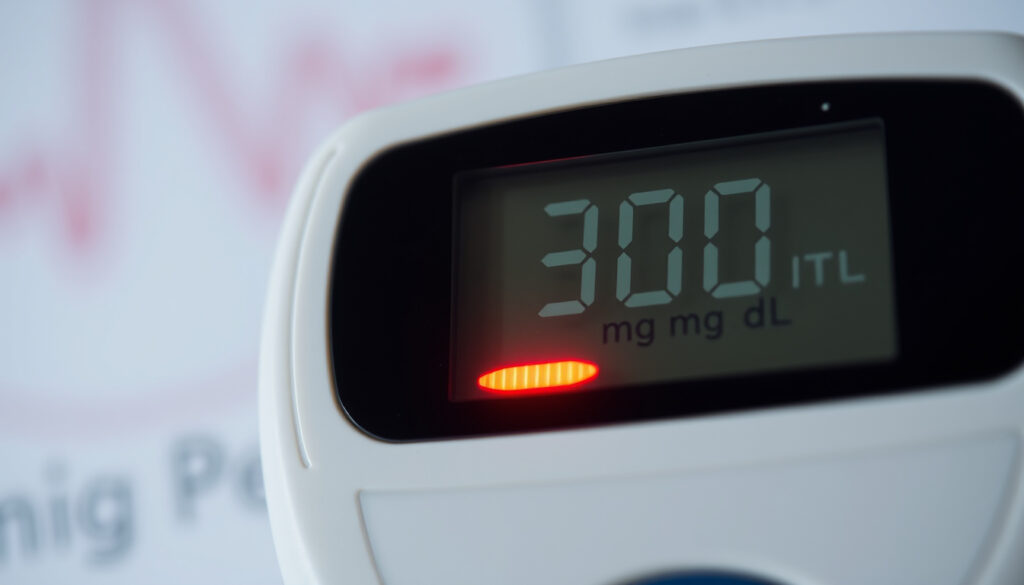
For someone with type 1 diabetes facing a reading of 300 mg/dL with ketones, the fastest intervention is medical-grade correction via insulin — not home remedies.
Warning: Do not exercise if blood sugar is above 240 mg/dL with ketones—this can worsen the condition.
Why this matters: knowing which action to take depends on whether you’re in hyperglycemia or hypoglycemia territory. Drinking water helps high blood sugar; drinking juice helps low blood sugar. Mixing them up can make things worse.
- Check ketones when blood sugar is above 240 mg/dL. Use urine strips. If positive, seek medical help and avoid exercise.
- Drink water to stay hydrated. This helps your kidneys flush excess glucose.
- If prescribed, take insulin as directed. Follow your emergency plan for high readings.
- For low blood sugar (below 70 mg/dL), consume 15 grams of fast-acting carbs. Recheck after 15 minutes; repeat if still low.
- Call emergency services if blood sugar is above 600 mg/dL or if you have severe symptoms (confusion, difficulty breathing, loss of consciousness).
The takeaway: If you are diabetic, knowing whether you are in hyperglycemia or hypoglycemia determines your next move—water for highs, sugar for lows—and mistaking them can be dangerous.
Is a tuna sandwich good for diabetics?
What kind of chips can a diabetic eat?
- Avoid fried potato chips — opt for baked chips, veggie chips, or air-popped popcorn with minimal salt
- Pair chips with a protein source (like tuna or cheese) to slow glucose absorption (CDC — Manage Blood Sugar)
- Control portion sizes — platforms like MyFitnessPal recommend sticking to single-serving packs (U.S. Dietary Guidelines)
What do Chinese people take for diabetes?
- Chinese herbal remedies like berberine have been studied for blood sugar control, but you should always consult a doctor before adding them to a regimen (CDC (U.S. public health authority))
- Some traditional Chinese medicine approaches include ginseng, bitter melon, and fenugreek, but evidence is mixed (American Diabetes Association)
- No herbal supplement replaces standard diabetes medication or dietary guidelines (Mayo Clinic (endocrine specialists))
The trade-off: tuna provides lean protein that stabilizes blood sugar, but the bread makes a difference — whole grain is a better choice than white bread, and portion size still matters.
Confirmed vs. Unclear — what we know
Confirmed facts
- Blood sugar below 70 mg/dL is hypoglycemia (CDC)
- Blood sugar above 240 mg/dL is hyperglycemia requiring ketone check (Mayo Clinic)
- Blood sugar above 600 mg/dL can cause hyperosmolar syndrome (Mayo Clinic)
- Normal fasting glucose is 70–100 mg/dL (Cleveland Clinic)
What’s unclear
- Exact stroke-level threshold may vary by individual health and diabetes type (American Diabetes Association)
- Optimal immediate reduction protocol for home settings varies based on time of day and insulin availability
- Effectiveness of Chinese herbal remedies like berberine is not well-established (CDC)
- Stress-induced blood sugar spikes may differ by individual (American Diabetes Association)
Quotes from experts
Blood sugar levels above 600 mg/dL can lead to diabetic hyperosmolar syndrome, a medical emergency.
— Dr. Maria Collazo-Clavell, MD, Mayo Clinic (endocrinology specialist)
Low blood sugar (hypoglycemia) can be dangerous if left untreated; blood sugar below 70 mg/dL is considered low.
— CDC Diabetes Division (U.S. public health authority)
For the roughly 38 million adults in the U.S. living with diabetes, the choice is clear: keep a blood sugar monitor handy, know the thresholds (70 and 240 mg/dL), and act fast when the meter says you’re in the danger zone — or risk an ER visit that might have been avoided.
Frequently asked questions
Can you die from low blood sugar?
Yes, severe hypoglycemia can lead to loss of consciousness, seizures, and death if not treated promptly. The CDC advises immediate action with fast-acting glucose — especially if blood sugar is below 54 mg/dL (CDC).
What is the highest blood sugar level recorded?
Levels above 600 mg/dL are considered a medical emergency and can be fatal without treatment. The highest recorded survival cases involve levels above 1,000 mg/dL, though this is extremely rare (Mayo Clinic).
How often should I check my blood sugar if it is high?
The CDC recommends checking when you first wake up, before meals, two hours after meals, and at bedtime. If your level is above 240 mg/dL, check at least every 2–4 hours and test for ketones (CDC).
Is 250 blood sugar dangerous?
Yes, a blood sugar of 250 mg/dL is above the 240 mg/dL threshold at which the American Diabetes Association recommends checking urine for ketones and avoiding exercise if ketones are present (American Diabetes Association).
What should I do if my blood sugar is 400?
A reading of 400 mg/dL is a medical emergency. Seek immediate medical help — do not exercise; drink water; check for ketones; and if you have insulin, follow your emergency plan. This level can lead to diabetic ketoacidosis or hyperosmolar syndrome (Mayo Clinic).
Can stress cause blood sugar to spike dangerously?
Yes, stress increases cortisol and adrenaline, which can raise blood glucose. The ADA notes that illness, stress, eating more than planned, and exercising less can all cause hyperglycemia (American Diabetes Association).
What is the difference between diabetic ketoacidosis and hyperosmolar syndrome?
DKA is more common in type 1 diabetes and involves ketones in urine; hyperosmolar syndrome (HHS) is more common in type 2 diabetes and leads to severe dehydration without ketones. Both are medical emergencies, but HHS often results in higher blood sugar levels (above 600 mg/dL) (Mayo Clinic).
More related posts
 Convert Kg to Lbs: Formula, Tables & Stone Guide
 403 Area Code Canada: Alberta Location, Time Zone, Map
 Cinéma Carrefour du Nord: Showtimes, Prices & Discounts
 Elizabeth Debicki: Height, Relationship, Ethnicity & More
 Hop On Hop Off Vancouver: Tours, Map, Prices & Guide
 Bar Stool Buying Guide: Heights, Types & Irish Retailers
 Jasveen Sangha: Sentence, Facts, and Ketamine Queen Case
 18 Inches in CM – Exact 45.72 cm Conversion