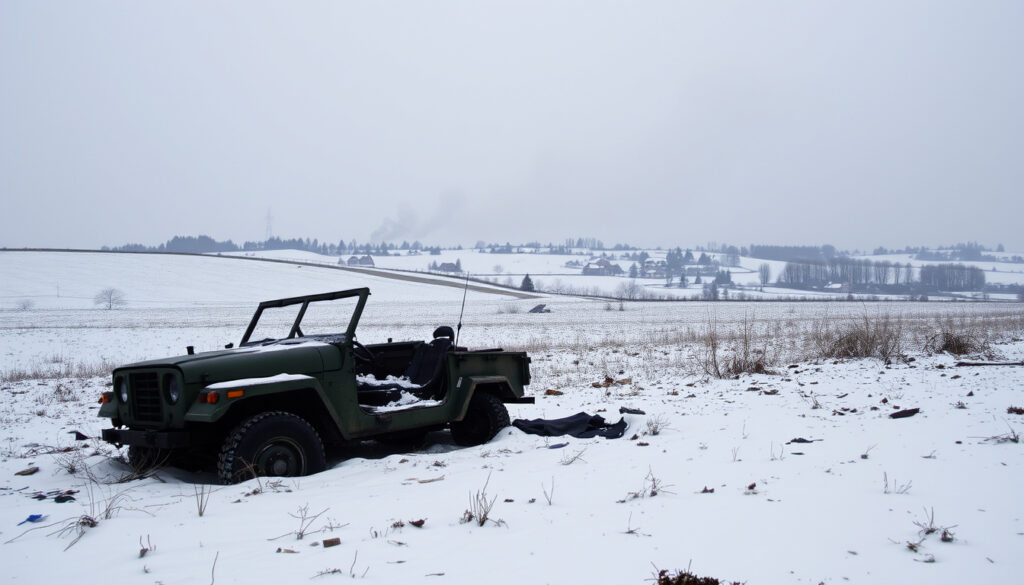
Ukraine War Latest News Today: Russian Attacks & Casualties
Few wars have been as relentlessly documented as Russia’s invasion of Ukraine. Yet even seasoned observers were jolted by the scale of the June 1–2, 2026, attack: Ukraine’s air force reported intercepting 40 cruise missiles and 602 drones in a single night (Ukrinform). The human cost—at least 10 civilians killed and more than 100 wounded—underscores a grinding conflict that keeps producing new records of violence.
Scale of attack: 40 missiles + 602 drones overnight ·
Reported casualties: At least 10 killed across Ukraine ·
Russian losses in one day: 1,440 troops (Ukrinform estimate)
Quick snapshot
- Russian ground forces heavily depleted: 1.2 million casualties (Feb 2022–Dec 2025) (CSIS)
- Ukrainian air defense neutralized 96% of recent drone strikes (UK estimates) (CSIS)
- Russia aims to recruit 409,000 contract soldiers in 2026 (Financial Times)
- NATO reinforces eastern flank with additional troops (CSIS)
- US announces new military aid package for Ukraine
- European Union extends sanctions against Russia for another six months
Key data points provide a quick overview of the conflict.
| Item | Value |
|---|---|
| Conflict start date | February 24, 2022 |
| Estimated Russian casualties (Feb 2022–Jun 2026) | Over 1,366,910 (Ukrinform estimate as of June 2, 2026) |
| Current front line | Eastern and southern Ukraine; heaviest fighting in Pokrovsk sector |
| Recent attack scale | 40 missiles + 602 drones (June 1–2, 2026) |
| Civilian casualties (OHCHR, to April 2026) | 15,850 killed, 44,809 injured |
Who is winning the war in Ukraine?
Current front-line situation
- On June 1, 2026, Ukraine reported 249 combat clashes, with the heaviest fighting concentrated in the Pokrovsk sector where Russian forces attempted 36 assaults (Ukrinform).
- Russia continues to make incremental gains in the east, but at extraordinary cost.
Territorial gains in 2025
According to CSIS (the Center for Strategic and International Studies), Russian forces have taken small parcels of territory in Donetsk and Luhansk oblasts, but these advances come at a devastating price: roughly 415,000 Russian casualties in 2025 alone, or nearly 35,000 per month.
Expert assessments
CSIS argues that “Russia is paying an extraordinary price for minimal gains” and is in decline as a major power. Ukraine’s military acknowledges losing some ground but points to the high Russian casualty rate as unsustainable.
The trade-off: Every inch of ground Russia takes in the east costs it hundreds of soldiers. For Ukraine, the challenge is maintaining enough Western ammunition and trained troops to keep that ratio unfavorable for Moscow.
What are Russia’s demands to end the war?
Official Russian negotiating positions
- Recognition of Crimea and the four annexed oblasts as Russian territory.
- Ukraine’s demilitarization and “neutral” status.
- Lifting of Western sanctions.
Ukraine’s counter-demands
Kyiv insists on full sovereignty within its internationally recognized borders and demands a binding security guarantee from NATO. Peace talks have been frozen since early 2024, with both sides unwilling to compromise on core demands (CSIS).
International mediation efforts
Turkey and Saudi Arabia have hosted rounds of indirect talks, but no substantive progress has been reported. Chinese-mediated proposals have been rejected by Kyiv because they would freeze current front lines.
Without a diplomatic off-ramp, the war will continue to grind through 2027, exhausting both sides and increasing the risk of a major escalation.
The catch: Russia’s maximalist demands make a negotiated settlement nearly impossible as long as Putin believes he can still win on the battlefield.
How much of Russia’s army is left?
Estimates of Russian personnel losses
- Ukrinform reports total combat losses of 1,366,910 Russian personnel as of June 2, 2026, including 1,440 killed in the previous day alone.
- CSIS estimates 1.2 million casualties (killed, wounded, missing) between February 2022 and December 2025, with battlefield fatalities between 275,000 and 325,000.
Equipment and force structure
Tank losses are estimated in the thousands; Russia has pulled T-62s and even T-54/55s from storage. Artillery tube losses are also severe. According to Forbes (defense analysis), Russia has lost more armored vehicles in Ukraine than the entire armored fleets of many NATO countries.
Mobilization and recruitment
Ukraine’s defense ministry says Russia has been unable to fully replace its losses since December 2025. The Kremlin aims to recruit 409,000 contract soldiers in 2026, but even that may not offset the monthly casualty rate of ~35,000 (Financial Times).
If recruitment targets fall short, Russia may face a structural manpower crisis by late 2026, forcing either another mobilization or a reduction in offensive operations.
The implication: Russia’s army is not gone, but its combat effectiveness has eroded significantly. The pre-2022 force of highly trained professionals has been replaced by a larger but less capable mass army.
How weakened is Russia’s military?
Operational capacity after prolonged war
- Russia’s ability to conduct large-scale combined-arms maneuvers is degraded; it now relies on massed artillery and drone swarms.
- Air power remains a threat but sortie rates have dropped due to losses and Ukraine’s air defense.
Comparison with pre-2022 force
In 2021, Russia had a reputation as the world’s second-most powerful military. Now, according to CSIS, that assessment has been heavily revised: Russia is “in decline as a major power” on conventional terms.
Impact on global military posture
NATO assessments indicate a significant reduction in Russian combat readiness for any other theater. The Baltic states and Poland face a less immediate conventional threat than before the war, though Russia’s nuclear deterrent remains intact.
Russia’s conventional forces are weaker, but the Kremlin has compensated by raising its military budget to a staggering 7.1% of GDP in 2025—four times the original 2024 plan—and now spends more on its military than all of Europe (Forbes).
What this means: Russia is spending itself into a fiscal crisis to sustain a military that is qualitatively much worse than the one that invaded in 2022. The long-term strategic picture is bleak for Moscow.
Does Russia have a bigger army than the USA?
Active personnel numbers
On paper, Russia has more active-duty troops (approximately 1.5 million vs. 1.3 million for the US). However, many of Russia’s troops are tied up in Ukraine, and a large portion are conscripts with limited deployability.
Military spending and equipment
The US defense budget (about $850 billion) dwarfs Russia’s (roughly $130 billion in 2024, per Forbes), even after Russia’s massive increase. NATO’s combined budget is over $1.2 trillion.
Global force comparisons
A direct comparison highlights the disparities between the two militaries.
| Category | Russia | United States |
|---|---|---|
| Active personnel (approx) | 1.5 million | 1.3 million |
| Military budget (2024) | $130 billion | $850 billion |
| Total military budget as % GDP (2025) | 7.1% | 3.5% |
| Main battle tanks (estimated operational) | 2,000–3,000 | ~2,500 |
| Nuclear warheads (strategic) | ~1,700 deployed | ~1,550 deployed |
| Deployable aircraft carriers | 1 (limited) | 11 |
One pattern across all comparisons: the US and NATO hold an overwhelming advantage in technology, logistics, and allied force integration. Russia’s numerical edge in personnel is largely theoretical because most of its army is conscript-based and cannot be projected globally.
Why this matters: In a direct conventional conflict, NATO would defeat Russia quickly. But the war in Ukraine is not a direct NATO–Russia war—it’s a proxy conflict with asymmetric rules of engagement that favor Russia’s willingness to accept high casualties.
Timeline of key events
Russia intensifies aerial bombardment of Ukrainian energy infrastructure, causing widespread blackouts (CSIS).
Ukraine’s commander-in-chief reports a new monthly high of 35,351 Russian casualties; drones account for 96% of those losses (Financial Times).
Russia launches one of its largest combined drone and missile attacks: 40 cruise missiles and 602 drones, of which Ukrainian air defense neutralizes most (Ukrinform). At least 10 civilians killed.
What is confirmed and what remains unclear
Confirmed facts
- Russia launched a massive drone-and-missile attack on June 1–2, 2026, targeting multiple Ukrainian cities (Ukrinform).
- At least 10 civilians were killed and over 100 injured according to Ukrainian officials (Ukrinform).
- Ukrainian air defense intercepted 602 drones and 40 missiles (Ukrinform).
- Russian overall combat losses exceed 1.36 million personnel (Ukrinform).
What’s unclear
- Exact number of Russian military fatalities is disputed; Western estimates range from 275,000 to over 400,000.
- Full extent of damage to Russian military capacity—how long can the Kremlin sustain current loss rates?
- Future trajectory of peace negotiations—no timeline for resumption of serious talks.
- Ukrainian air defense neutralization percentage (96%) is a Ukrainian claim, not independently verified.
Voices from the conflict
“It was a really bad night for Ukraine. They hit us with everything they had.”
— Ukrainian military official, quoted by Ukrinform
“The attack on Moscow was the largest in over a year.”
— Russian state media, as cited by Al Jazeera
“Russia is paying an extraordinary price for minimal gains and is in decline as a major power.”
— CSIS (Center for Strategic and International Studies)
The patterns are clear: Russia can still inflict terrible damage on Ukrainian cities, but its military is consuming itself at a rate that no advanced economy could sustain. For Ukraine, the challenge is maintaining Western support long enough to turn attrition into a strategic victory. For the Kremlin, the battlefield reality is that every new offensive comes at a price that pushes Russia closer to a fiscal and demographic cliff.
For Ukraine and its allies, the implication is clear: sustain the supply of air defense systems and long-range drones, and Russia will eventually run out of the men and machinery needed to continue the war. For Moscow, the only viable off-ramp remains a negotiated settlement—but that requires abandoning the maximalist demands that make peace impossible.
For a detailed breakdown of the casualties and military developments, see the latest updates on Russian attacks from The UK View.
Frequently asked questions
What happened in Ukraine overnight?
On June 1–2, 2026, Russia launched a massive combined drone and missile attack. Ukraine’s air force reported shooting down 40 missiles and 602 drones. At least 10 civilians were killed and over 100 injured across the country.
How many people were killed in the latest attack?
At least 10 civilians were killed, including four in Kyiv, and around 100 were wounded according to Ukrainian authorities (Ukrinform).
Which cities were targeted by Russia?
Multiple cities were hit, with the heaviest damage reported in the capital Kyiv—seven districts reported fires and structural damage. Other regions across the country also came under bombardment.
Did Ukraine retaliate?
Ukrainian forces have not publicly confirmed a specific retaliatory strike for this attack, but they have consistently targeted Russian logistics hubs and oil depots in occupied territories and inside Russia.
What is the international reaction to the latest escalation?
NATO has reiterated its commitment to Ukraine’s defense, the US announced a new military aid package, and the European Union extended sanctions against Russia. Calls for de-escalation continue.
How long has the war been going on?
The full-scale invasion began on February 24, 2022. As of June 2026, the war has been ongoing for more than four years.
What is the current state of the front line?
The front line remains concentrated in eastern and southern Ukraine, with the Pokrovsk sector seeing the most intense fighting. Russia holds roughly 18% of Ukrainian territory.
Are there any ceasefire negotiations ongoing?
There are no active negotiations for a full ceasefire. Mediation efforts by Turkey and Saudi Arabia have stalled, and both sides remain far apart on territorial demands.
More related posts
 West Indies vs Bangladesh – 2024 Series Results and Highlights
 New Balance Men’s Shoes: Best Models & Podiatrist Picks
 Puppies for Sale Near Me in Ireland – Local & Rescue Dogs
 Gloria Vanderbilt: Wealth, Inheritance & Estate Planning
 Where the Crawdads Sing: True Story, Killer & Ending Explained
 Dylan Strome: Biography, Nickname, Family & Career Stats
 Melanie Griffith: Illness, Divorce, Accident, and Facts
 Shane Doan Now: Career, Net Worth, Family & Current Role (2025)