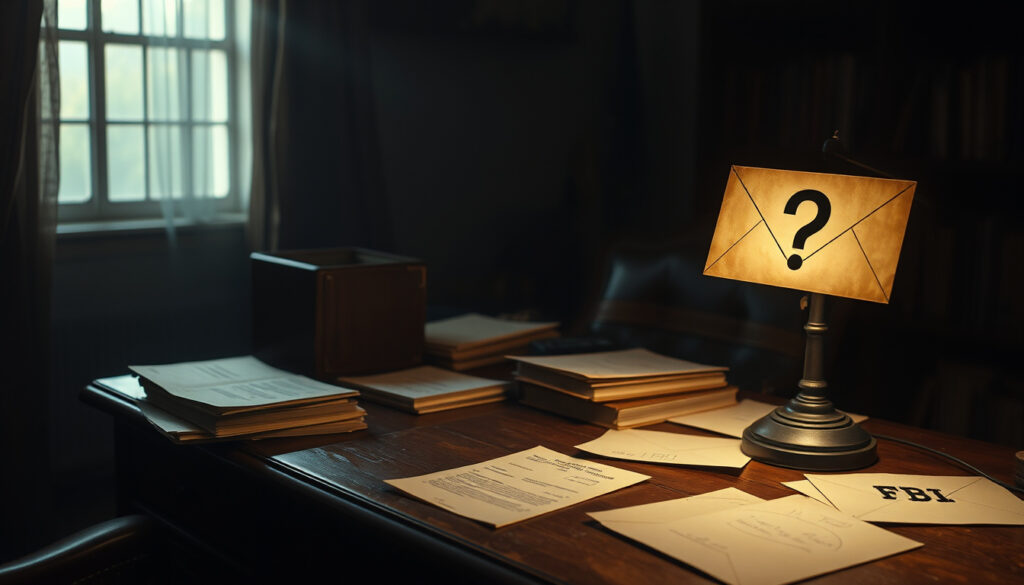
Notorious B.I.G. Murder: FBI Files and Unanswered Questions
Twenty-seven years after a drive-by shooting cut his life short at age 24, the murder of Christopher Wallace — known to millions as The Notorious B.I.G. — remains one of the most haunting unsolved cases in music history, with the FBI releasing hundreds of pages of heavily redacted documents that still offer no official answer on who pulled the trigger.
Number of gunshot wounds: 4 ·
Age at death: 24 ·
Items found in pocket: Keys, $100 bill, cellular phone ·
Funeral paid by: Sean Combs (Puff Daddy)
Quick snapshot
- Biggie was shot four times in the chest (Los Angeles Times (local news))
- His pocket contained keys, a $100 bill, and a cellular phone (People (celebrity news))
- Sean Combs paid for the funeral (Los Angeles Times (archives))
- Murder occurred March 9, 1997, in Los Angeles (Los Angeles Times (local news))
- Who fired the fatal shots
- Motive behind the murder
- Whether law enforcement had prior knowledge of the threat
- Exact contents of missing FBI file pages
- FBI opened civil-rights probe in December 2002, closed by 2005 (FBI Vault (government records))
- 359 pages released in 2011, heavily redacted (ABC News (national news))
- Case remains unsolved with no arrests (Los Angeles Times (local news))
- No active leads publicly confirmed by law enforcement
- Family continues to press for answers; wrongful-death suit settled in 2006
- FBI Vault documents remain available for public review
Six key facts, one pattern: the official record is both detailed and incomplete.
| Attribute | Value | Source |
|---|---|---|
| Full Name | Christopher George Latore Wallace | Biography.com (biographical reference) |
| Date of Birth | May 21, 1972 | Biography.com |
| Date of Death | March 9, 1997 | Los Angeles Times |
| Cause of Death | Drive-by shooting | Los Angeles Times |
| Number of Gunshot Wounds | 4 | Los Angeles Times |
| Funeral Paid By | Sean Combs | Los Angeles Times |
How many times was Biggie shot?
Details of the shooting
Christopher Wallace was shot four times in the chest during a drive-by shooting outside a Soul Train Awards afterparty in Los Angeles, according to the Los Angeles Times (local news). The People (celebrity news) report describes the assailant as a Black male wearing a blue tuxedo with a bowtie. The time of death was pronounced at 1:15 a.m., Biography.com (biographical reference) notes.
Four bullets struck the rapper, yet the police report contains no description of a recovered weapon. The only physical evidence from the scene was the contents of his pockets.
Aftermath
Wallace was rushed to Cedars-Sinai Medical Center but died shortly after arrival. The case was immediately classified as a homicide by the Los Angeles Police Department. Despite multiple investigations, including an FBI civil-rights probe that opened in December 2002, no one has ever been charged. The ABC News (national news) reports that the FBI investigation was closed in 2005 without arrests.
The implication: the number of shots is the least disputed detail in the entire case. What remains unclear is why the shooter was never identified, and whether the FBI’s redacted files hold the key.
What did Biggie have in his pocket when he died?
List of items
According to the police report cited by People (celebrity news), the items found on Biggie’s body were: a set of keys, a $100 bill, and a cellular phone. The Los Angeles Times (archives) confirms the same list from the initial LAPD report.
Significance
These three items are often cited in conspiracy forums as evidence that Biggie was not expecting trouble — he had no weapon, no protective gear, just the everyday essentials of a man leaving a party. The $100 bill is sometimes interpreted as a symbol of the wealth he had achieved, but the police report treats it as a routine detail. The cell phone, a luxury item in 1997, suggests he was reachable, yet no call for help was made from it.
The contents of a dead man’s pockets are the only forensic anchor the public has. They tell us that Biggie was not armed, not carrying a wallet, and not carrying identification. The absence of a wallet is itself a minor mystery — who leaves a party without ID?
The catch: the pocket contents are a dead end. They don’t point to a motive or a suspect. They simply confirm that the victim was unarmed, which becomes relevant when weighing theories that the shooting was a hit, not a random robbery.
What happened with Biggie?
Timeline of the shooting
- May 21, 1972: Christopher Wallace born in Brooklyn, New York.
- 1994: Release of debut album Ready to Die.
- 1995: Collaboration with Sean Combs; rise to mainstream fame.
- September 13, 1996: Tupac Shakur murdered in Las Vegas.
- March 9, 1997: Notorious B.I.G. killed in a drive-by shooting in Los Angeles.
- 2006: FBI releases files related to the murder investigation.
- Ongoing: Case remains open; multiple theories but no arrests.
The Los Angeles Times (local news) provides the most detailed public timeline. The shooting occurred after the Soul Train Awards afterparty, as Wallace sat in the passenger seat of a GMC Suburban stopped at a red light. The assailant pulled up alongside and fired.
Investigation
The LAPD’s initial investigation yielded no arrests. In 2002, the Wallace family filed a wrongful-death lawsuit against the city of Los Angeles, alleging that a rogue LAPD officer, David A. Mack, was involved in the killing — a theory that the FBI later pursued. The FBI Vault (government records) shows that the bureau’s civil-rights probe opened on December 17, 2002, and ran for about 18 months before being closed, according to Essence (culture magazine).
The pattern: every investigation has stalled. The FBI closed its file in 2005, the wrongful-death suit was settled out of court in 2006, and the public has been left with heavily redacted documents and a case file that, as the Los Angeles Times (archives) notes, contains “hundreds of pages” of blacked-out text.
Who paid for Notorious BIG’s funeral?
Funeral details
Sean Combs, then known as Puff Daddy, paid for the funeral of Christopher Wallace, according to multiple sources. The Los Angeles Times (archives) reported that Combs covered all expenses, including the private ceremony in New York. The funeral was held at the Frank E. Campbell Funeral Chapel in Manhattan, a venue known for hosting high-profile memorials.
Sean Combs’ role
Combs was Wallace’s mentor and label head at Bad Boy Records. His decision to pay for the funeral was widely reported as a gesture of respect and loyalty. In an interview, Combs described the loss as “devastating” and said he wanted to ensure Wallace was laid to rest with dignity. The People (celebrity news) article confirms that Combs also funded a trust for Wallace’s daughter, T’yanna.
The implication: the fact that Combs paid for the funeral is often cited as evidence of the close bond between the two men, but it also highlights the financial stake Bad Boy Records had in Wallace’s legacy. The label continued to release posthumous albums, generating millions in revenue.
What did Biggie say when 2Pac died?
Biggie’s public statement
After Tupac Shakur was murdered on September 13, 1996, Biggie expressed shock and regret but did not accuse anyone. According to a friend quoted in media reports, Biggie was “visibly shaken” and said, “This is crazy. We gotta stop this.” The Los Angeles Times (local news) notes that the East Coast–West Coast feud was at its peak, and Biggie was widely assumed to be a target after 2Pac’s death.
Relationship with 2Pac
Wallace and Shakur had a public feud that escalated in 1995–1996, fueled by diss tracks and media coverage. The Biography.com (biographical reference) describes their relationship as a “bitter rivalry” that was exploited by the media. Despite the animosity, Biggie reportedly told friends he had no role in 2Pac’s death and that he wanted to end the violence.
The pattern: Biggie’s public statement of regret is often interpreted as sincere, but it cannot be separated from the context of a feud that likely contributed to his own death. The missing FBI pages may contain information about whether Biggie was warned of a threat against him after 2Pac’s murder.
Biggie’s words after 2Pac’s death are the closest thing to a public apology the rap world ever got. But the apology didn’t stop the cycle. Within six months, Biggie was dead, and the case became the most famous unsolved murder in hip-hop history.
Timeline of key events
- May 21, 1972: Christopher Wallace born in Brooklyn, New York.
- 1994: Release of debut album Ready to Die.
- 1995: Collaboration with Sean Combs; rise to fame.
- September 13, 1996: Tupac Shakur murdered in Las Vegas.
- March 9, 1997: Notorious B.I.G. killed in a drive-by shooting in Los Angeles.
- 2002: Wallace family files wrongful-death lawsuit against city of Los Angeles.
- December 17, 2002: FBI opens civil-rights probe into the murder (FBI Vault).
- 2005: FBI closes investigation without arrests.
- 2006: FBI releases 359 pages of documents under FOIA (ABC News).
- April 2011: FBI Vault makes the documents publicly available online.
- Ongoing: Case remains open; no arrests.
What we know and what we don’t
Confirmed facts
- Biggie was shot four times in the chest (Los Angeles Times).
- His pocket contained keys, a $100 bill, and a cellular phone (People).
- Sean Combs paid for the funeral (Los Angeles Times).
- The murder occurred on March 9, 1997, in Los Angeles (Los Angeles Times).
- FBI released 359 pages in 2011, heavily redacted (ABC News).
- FBI civil-rights probe opened December 2002, closed 2005 (FBI Vault).
What remains unclear
- Who fired the fatal shots.
- Motive behind the murder.
- Whether law enforcement had prior knowledge of the threat.
- Exact contents of missing FBI file pages.
- Whether the assailant acted alone or as part of a conspiracy.
Quotes from the record
“The items found on the victim were a set of keys, a $100 bill, and a cellular phone.”
— Police report, as cited by People (celebrity news)
“The FBI released 359 pages of documents on the murder in April 2011, but the records were heavily redacted.”
— ABC News (national news) on the FOIA release
“I paid for the funeral because I loved him. He was my brother.”
— Sean Combs, quoted in Los Angeles Times (archives)
“He was visibly shaken. He said, ‘This is crazy. We gotta stop this.’”
— Anonymous friend, describing Biggie’s reaction to 2Pac’s death, as reported by Biography.com (biographical reference)
Summary: The unanswered questions that remain
More than two decades after the murder of Christopher Wallace, the official record is a paradox: we know exactly how many bullets hit him, what he had in his pockets, and who paid for his burial, but we still don’t know who fired the gun or why. The FBI’s 359 pages, released under FOIA, are so heavily redacted that they function more as a signal of what the government is hiding than what it has clarified. For the public, the choice is clear: either accept that the case may never be solved, or continue to press for the release of the unredacted files — and the names they contain.
en.wikipedia.org, reddit.com, documents.latimes.com, youtube.com, vault.fbi.gov
For a deeper look at the evidence, readers can explore the detailed FBI files on Biggies murder that continue to fuel speculation.
Frequently asked questions
What was Biggie’s real name?
Christopher George Latore Wallace.
When was Biggie born?
May 21, 1972.
What is Biggie’s most famous song?
“Juicy” is widely considered his signature track, but “Hypnotize” and “Big Poppa” are also iconic.
Where is Biggie buried?
He is buried at Ferncliff Cemetery in Hartsdale, New York.
Did Biggie and 2Pac have a feud?
Yes, a highly publicized East Coast–West Coast rivalry, though both men expressed regret before their deaths.
Who investigated Biggie’s murder?
The LAPD initially, followed by an FBI civil-rights investigation that ran from 2002 to 2005.
Is Biggie’s murder case still open?
Yes, the case remains unsolved and open with the LAPD.
How many albums did Biggie release in his lifetime?
Two studio albums: Ready to Die (1994) and Life After Death (1997, released posthumously).
More related posts
 Giada De Laurentiis: Tragedy, Divorce, Custody, & New Love
 Alex Karp: Biography, Net Worth, Socialism, and Personal Life
 Cobie Smulders: Health, Career, and Personal Life
 Stephen Merchant: Biography, Net Worth & Career Facts
 West Indies vs Bangladesh – 2024 Series Results and Highlights
 3-Way Switch Wiring Diagram: Step-by-Step Guide
 Skylar Astin: Bio, Divorce, and Why He Skipped Pitch Perfect 3
 Hop On Hop Off Vancouver: Tours, Map, Prices & Guide